

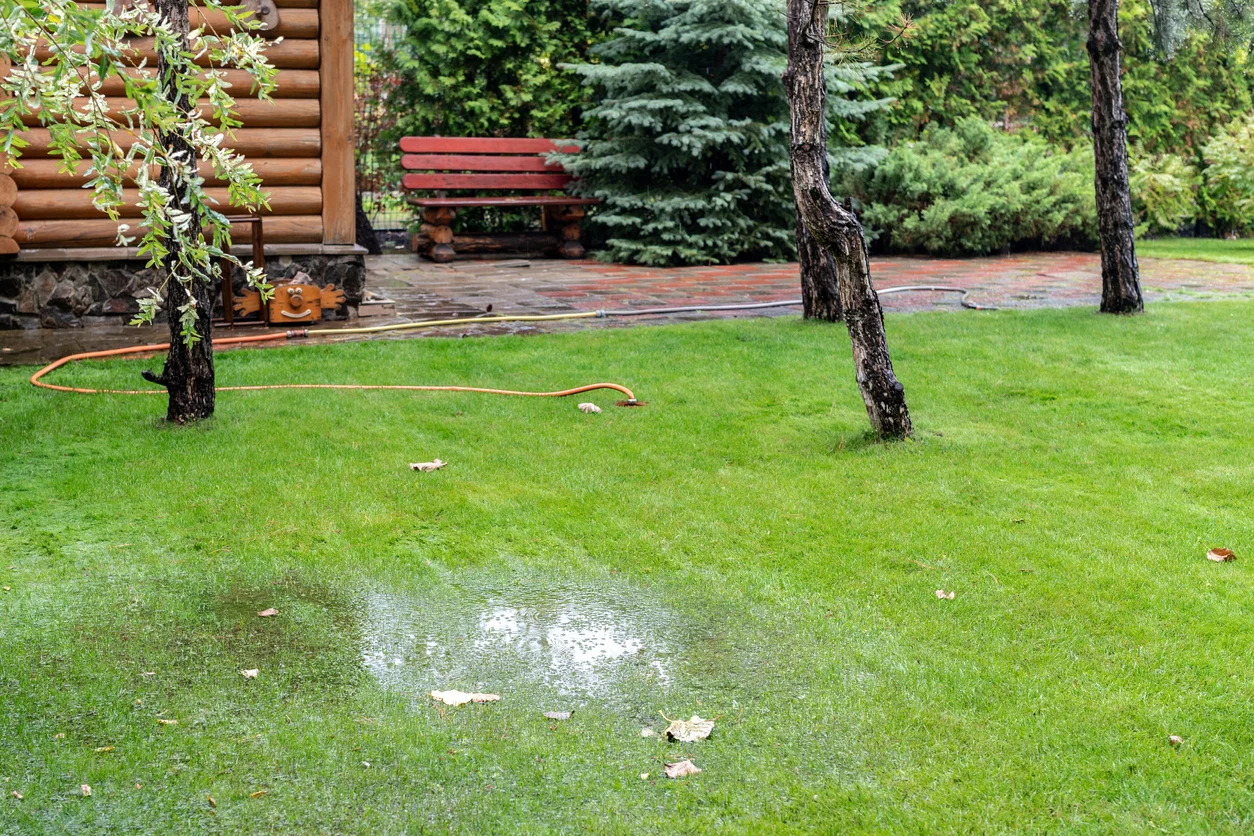
The conversation around overwatering tends to start and end with the water bill. That is a reasonable place to focus, given that the financial consequences are immediate and visible. But the environmental consequences of running an irrigation system beyond what a landscape needs are considerably broader, and they do not show up on any monthly statement.
Understanding what overwatering does, beyond the property line, is worth the attention of anyone who manages a residential or commercial irrigation system.
The Scale of Outdoor Water Waste
Residential outdoor water use in the United States is not a minor portion of national consumption. According to the EPA's WaterSense program, residential outdoor water use accounts for nearly 8 billion gallons of water each day nationwide, with the majority of that use going to landscape irrigation. The volume alone makes efficiency a matter of public significance, not just personal economy.
What makes the figure more troubling is how much of that water accomplishes nothing useful. The EPA estimates that up to 50 percent of outdoor irrigation water is wasted due to overwatering caused by inefficient irrigation methods and systems. That is approximately 4 billion gallons per day, lost to evaporation, wind, and runoff from systems running on schedules that bear no relationship to what the landscape actually requires.
What Happens When Water Leaves the Property
Water that a lawn cannot absorb does not simply disappear. It moves, and it carries things with it. Overwatering causes pesticides, fertilizers, and sediment to run off into streams and lakes through the storm drain system. For residential properties with regular fertilization programs, this is a direct transfer of nutrients from the landscape into local waterways, with consequences that extend well beyond any individual property.
The mechanism is well documented. Research published in peer-reviewed literature has found that nitrogen and phosphorus in lawn irrigation-driven surface runoff from residential neighborhoods represent a meaningful contributor of nutrients to surface waters. These nutrients, nitrogen and phosphorus in particular, are the primary drivers of a process called eutrophication, in which excess nutrient loading causes algae to proliferate rapidly in receiving water bodies.
As algae feed on these excess nutrients, they rapidly multiply, producing algal blooms that deplete oxygen in the water and can render it devoid of aquatic life. The consequences for local ecosystems, recreational water bodies, and in some cases drinking water sources are serious and well established in the scientific literature. Nitrogen and phosphorus runoff from residential and agricultural applications are among the largest documented sources of pollution to coastal dead zones across the United States.
Soil Degradation & the Loss of Landscape Function
Overwatering does not only affect what leaves a property. It damages the soil system that remains. Healthy soil contains a natural balance of minerals, organic matter, air spaces, and moisture, and when water fills those air pockets, roots begin to suffocate and soil biology starts to break down. Soil that has been chronically oversaturated loses its capacity to support the microbial activity, drainage, and nutrient retention that a functioning landscape depends on.
Overwatering also causes soil compaction, reduces the lawn's ability to retain nutrients, and encourages the root system to remain shallow rather than developing the deeper root structure that makes turf more resilient to heat, drought, and stress. A lawn managed on an overwatering schedule is, counterintuitively, a weaker and more environmentally vulnerable lawn than one managed on a properly calibrated one.
Oversaturation also slows decomposition and contributes to heavy thatch buildup, which traps additional moisture at the surface and creates conditions favorable to fungal pathogens, mosquito activity, and invasive weed species. The environmental and maintenance costs of reversing this kind of degradation are substantially higher than the cost of preventing it through proper irrigation management.
Freshwater Supply & the Broader Resource Question
Overwatering is not a contained problem. Every gallon applied beyond what a landscape needs is a gallon drawn from a freshwater supply that a growing number of regions are under increasing pressure to manage carefully. Depending on the region, homeowners use between 30 and 70 percent of their total household water outdoors. In arid and semi-arid areas where water scarcity is already a structural concern, that proportion represents a substantial demand on finite resources.
Municipal water systems draw from surface and groundwater supplies shared across communities. Irrigation systems running on outdated or uncalibrated schedules contribute to aggregate demand that affects water availability, infrastructure capacity, and long-term supply planning. The individual-scale impact of any single property is modest. The cumulative impact of millions of properties running inefficient irrigation schedules is not.
Frequently Asked Questions About Overwatering & Irrigation Waste
How much water does an overwatered lawn waste?
In many cases, it is far more than homeowners realize. The EPA estimates that up to half of outdoor irrigation water is wasted because of runoff, evaporation, and inefficient watering schedules.
Can overwatering really affect local waterways?
Yes. Excess irrigation water often carries fertilizer, pesticides, and sediment into storm drains, streams, and lakes, where it can contribute to pollution and algae growth.
What are the signs that a lawn is being overwatered?
Constantly soggy soil, mushrooms, yellowing grass, shallow roots, runoff, and standing water are all common warning signs.
Does watering more make grass healthier?
Usually not. Too much water can weaken root systems and create conditions that encourage fungus, weeds, and soil compaction.
Why do some places intentionally flood grass or parks with water?
In some regions, properties use a system called flood irrigation. This method delivers water in controlled intervals, deeply soaking the soil before drying out again. It is very different from chronic overwatering caused by inefficient sprinkler schedules.
Flood irrigation is designed for specific climates, soil conditions, and water-delivery systems, while routine overwatering can lead to runoff, weak roots, and wasted water.
What helps reduce unnecessary irrigation waste?
Smart controllers, seasonal adjustments, routine inspections, and properly calibrated watering schedules can all help landscapes use water more efficiently.
What Responsible Irrigation Management Actually Looks Like
The solution to overwatering is not underwatering. It is precision: delivering the right amount of water to the right zones at the right time, adjusted for actual weather conditions and seasonal variation, rather than running a fixed schedule regardless of what is happening outside.
The gap between how most irrigation systems currently operate and how they could operate with proper management represents an enormous volume of preventable waste — in water, in cost, and in environmental impact. For property owners who take that seriously, the most direct path to closing that gap is working with a service provider whose entire approach is built around using less water, not more.
Conservation is not incidental to what Conserva Irrigation is all about. Environmental responsibility is the premise on which the company was founded, and it informs every decision of our 5-step process applied to every property — covering everything from how a system is initially designed and installed to how it is programmed, maintained, and adjusted across seasons and conditions.
Choose an Irrigation Team Committed to Sustainability
Sustainable lawn watering does not compromise landscape quality. Properly managed irrigation produces healthier turf, stronger root systems, and better long-term landscape outcomes, while reducing the environmental load that overwatering places on soil, waterways, and the freshwater supply.
A properly calibrated smart controller can save an average home up to 15,000 gallons of water annually compared to a standard clock-based system. For commercial properties with larger zones and longer run times, the reduction in waste is proportionally greater.
Conserva Irrigation provides irrigation system audits, smart controller installations, and seasonal programming services (including summarization and winterization) designed to bring systems into alignment with what landscapes actually require.
To schedule an irrigation audit or learn more about smart water management for your property, call Conserva Irrigation at (804) 353-6999 or find a location near you.

.jpg.2607091646182.webp)
.jpg.webp)

