
Your Drainage Can't Wait Until It's Already a Problem
One harsh reality most homeowners and property managers find out the hard way is that drainage issues don't announce themselves politely. They show up suddenly, unexpectedly, and all at the exact same time. And for many, they take place during the first real rainstorm of the spring season.
To make matters worse, drainage solutions need to wait until the issue clears. In other words, the damage is already in motion by the time you're looking at standing water, soggy turf, and mud where a lawn used to be. Flooding, especially in spring, has a knack for being unforgiving.
The silver lining is that, with a little foresight and proactive action, many drainage issues are completely avoidable. But the window to get ahead of it is right now, before the rain starts showing up in the forecast every other week.
Why Spring Is the Season That Breaks Bad Drainage
Winter is rough on the ground, even in climates that don't get heavy snow. Soil compacts, drainage pathways get clogged with debris and sediment, and the whole system that was quietly doing its job last fall is now a little worse for wear heading into spring. Then the rain comes, and it comes fast, and suddenly you've got more water moving across your property than the landscape can handle.
Water always finds a way, and if your drainage isn't directing it, it's going to find its own path. Unfortunately, in many instances, that path is straight through your lawn, into your foundation, or pooling in low spots, where it just sits and does damage.
A few of the most common things that tend to go sideways when drainage isn't ready for spring include:
- Root rot sets in quietly. Turf and plants sitting in waterlogged soil for even a few days start to suffocate at the root level, and by the time you notice something looks off above ground, the damage underneath is already significant.
- Low spots become money pits. Standing water that doesn't drain properly has a way of turning small landscape issues into expensive ones, whether that's dead grass, pest problems, or water finding its way toward structures it has no business being nearby.
- Erosion moves fast. Unmanaged water running across bare or thin turf takes topsoil with it, and once that starts happening, you're dealing with a drainage problem and grading problem too, which is a whole other conversation.
What "Getting Ahead of It" Actually Looks Like
Spring drainage preparation isn't complicated in concept. What it boils down to is ensuring water has a clear, intentional path off your property before the season throws a week of rain at it. In practice, that means a few different things depending on what your property is working with.
For some properties, the fix is as straightforward as clearing out clogged drainage channels, cleaning catch basins, and making sure downspout extensions are actually moving water away from the foundation and not just dumping it two feet from the house.
For others, it means looking at the grading and figuring out why water keeps finding its way to the same low spot every time it rains, and whether a French drain or a dry creek bed makes more sense for properly redirecting it.
The common thread across all of it is that fixing drainage reactively, after the damage is visible, costs significantly more than addressing it proactively.
The Stakes of Drainage Issues are Often Higher for Commercial Properties
Commercial properties are a different animal altogether when it comes to drainage, and not just because they're bigger. The accumulation of having more hardscape, more surface area, more foot traffic, and more liability all combine together to make a drainage failure during a heavy rain event a much bigger deal than a soggy backyard.
Poorly drained commercial properties can quickly become a public hazard. Just think of a parking lot with standing water where customers and tenants are forced to wade through, or entryways that turn into runoff channels every time it rains hard, or landscape beds that have been slowly drowning all winter and are now just waiting to show it.
None of these scenes is desirable. Beyond the bad aesthetics and poor reflection on a commercial property, they can create real problems and liabilities (slip hazards, electrical dangers, pest issues, structural concerns near foundations, and turf and landscape damage that's expensive to fix and hard to ignore).
Why Commercial Flooding Demands Even Faster Action
The other thing about commercial drainage is that the window for dealing with it quietly is narrow. On a residential property, a drainage issue is something you can sometimes deal with on your own timeline. On a commercial property, it becomes visible to clients, tenants, and the public quickly, and once water is pooling in the wrong places during a rain event, it's a little too late to be scheduling an assessment.
What good commercial drainage preparation looks like varies a lot by property type. A retail center with a large parking lot and multiple downspout discharge points has different needs than a mid-size office property with landscaped common areas and a courtyard. An HOA managing shared green space has a completely different set of priorities than an industrial property with mostly hardscape and heavy runoff concerns.
The throughline across all these examples is that the drainage system needs to be designed around what that specific property experiences during a real rain event. That is why Conserva Irrigation works with commercial properties of all sizes and configurations, assessing what's happening on the ground and recommending solutions that fit the scope of the problem.
The Landscape You Protect Now Is the One You Don't Have to Rebuild Later
A well-drained property handles spring rain the way it's supposed to: water moves where it should, turf stays healthy, and the landscape comes out of the wet season in good shape. A property with drainage issues that went unaddressed all winter tends to tell a different story come May or June, and the bill to fix them is rarely a pleasant surprise.
What Irrigation Professionals Can Actually Do About It
At Conserva Irrigation, we offer a comprehensive, practical range drainage installations, and the whole point of the process is to figure out what your specific property needs (rather than defaulting to the most involved solution because it sounds thorough).
A trained team member comes out, assesses what's happening on your property, and makes recommendations based on your situation and what you're dealing with during heavy rain.
From there, we offer drainage options covering a pretty wide range of needs, depending on what the landscape and property call for, including:
- French drains (basically a rock-covered trench with a pipe running through it that intercepts water and redirects it somewhere it actually belongs)are one of the more common go-to solutions for many.
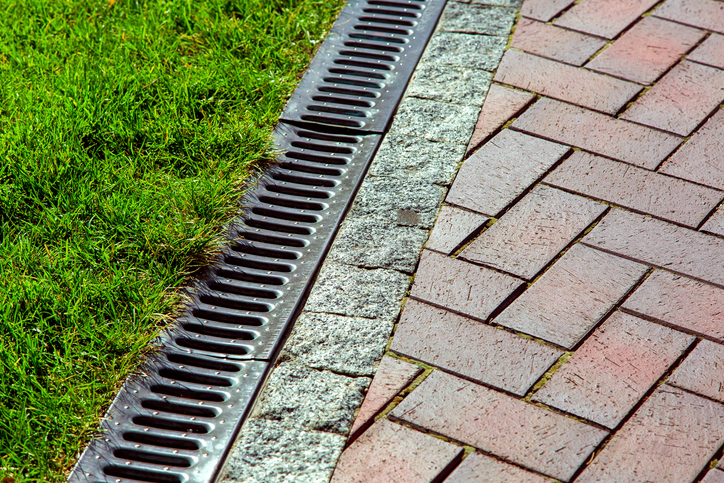
- Channel drains are great for hardscape areas (think driveways, patios, pool decks) or anywhere water tends to sheet across a surface and collect where you don't want it.
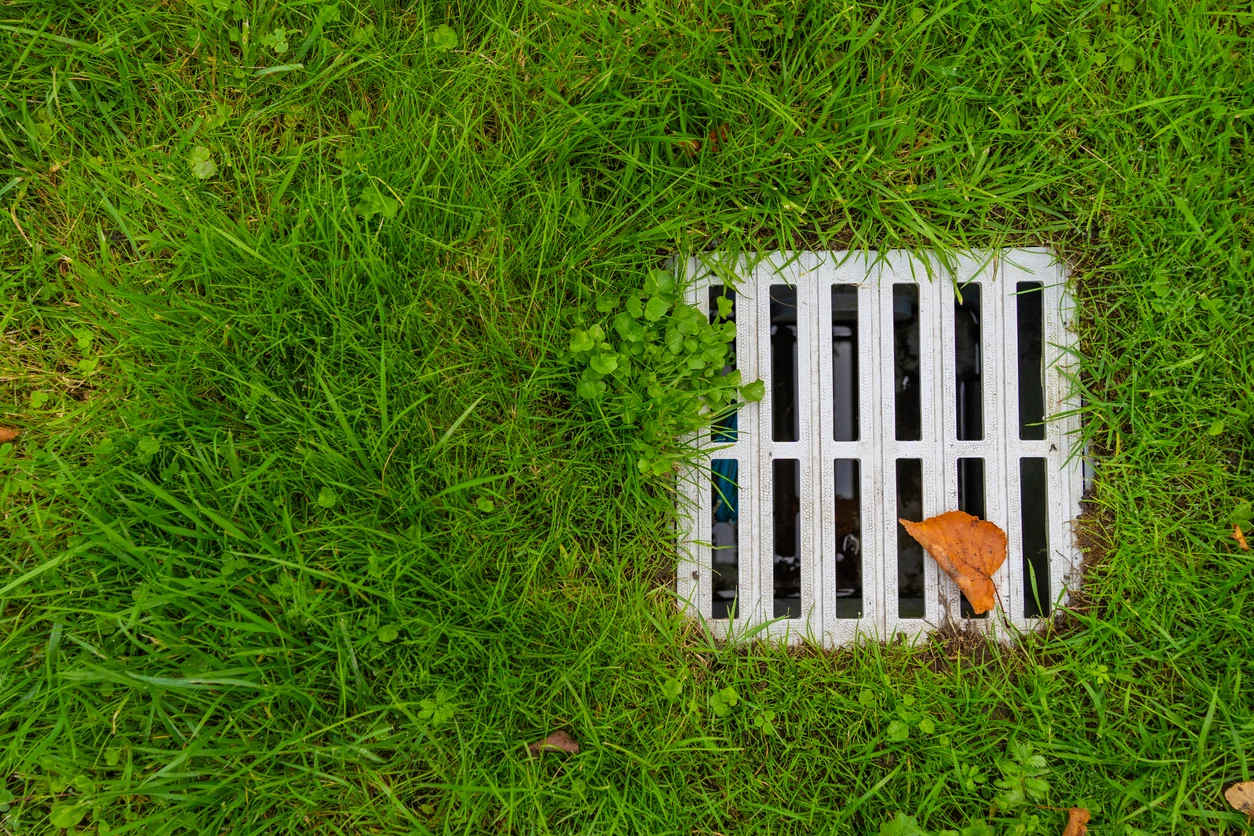
- Downspout catch basins and direct pipe solutions connect directly to your gutter system and get water moving away from the foundation fast, which is often the first place drainage problems show up and the last place you want water hanging around.
- Downspout catch basins are a smarter alternative to standard catch basins for properties with a lot of tree coverage, since they're designed to handle the debris load that comes with it.
- Pop-up emitters serve as the endpoint of the entire underground system, releasing water at a controlled location away from the house rather than letting it surface wherever the pipe ends.
- Dry creek beds do the same job but with a dash of visual appeal, which makes them a solid option for properties where the drainage solution also needs to look like it belongs there.
Whatever drainage you choose, one thing worth knowing upfront: drainage work is real work. Getting the right system in place means digging into the ground, running pipe, and doing it right, and depending on the scope, some additional landscaping may be needed afterward to get everything back to how it looked before.
Conserva Irrigation is fully prepared and capable of handling these tasks. Our team is straightforward from the start, so there are no surprises mid-project. Whether you're managing a single residential lawn or overseeing commercial grounds with more complex drainage needs, the sooner you get eyes on it, the better shape you'll be in when spring arrives.
Give us a call at (804) 353-6999 or find your local franchise to schedule a drainage assessment, because the best time to address a drainage problem is always before it becomes one.