

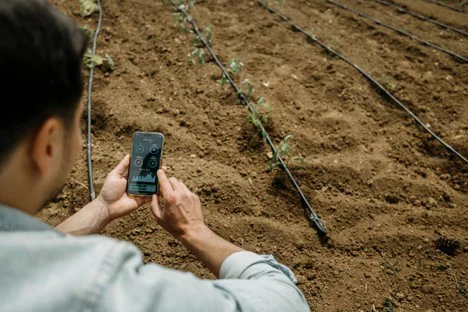
An irrigation schedule that made sense two months ago may not make sense today. Temperature changes, rainfall, humidity, wind, and seasonal shifts all affect how much water a landscape actually needs. Yet traditional irrigation controllers often continue to run on the same schedule until someone manually changes it.
Weather-based irrigation controllers take a different approach. By using weather data to adjust watering schedules, these systems can respond to changing conditions rather than relying entirely on a fixed program.
For commercial properties with extensive landscapes, that difference can add up quickly.
What Is a Weather-Based Irrigation Controller?
A weather-based irrigation controller adjusts watering based on environmental conditions rather than simply following a predetermined calendar.
Depending on the system, the controller may use local weather data, evapotranspiration information, or sensors installed on the property to determine whether the landscape needs more or less water.
Instead of asking, "What day is it supposed to water?" the system is better equipped to ask, "How much water does this landscape need right now?"
That distinction is important because plant water requirements can change significantly throughout the season.
How Do Weather-Based Controllers Know When to Adjust Watering?
Weather-based controllers use information about conditions that influence how quickly landscapes gain or lose moisture.
These factors can include:
- Temperature. Higher temperatures generally increase water loss from soil and plants, while cooler conditions reduce demand.
- Rainfall. Recent precipitation can reduce or eliminate the need for supplemental irrigation.
- Humidity. Moist air can slow the rate at which water leaves plants and soil.
- Wind. Wind can increase moisture loss and affect how efficiently water reaches its intended area.
- Evapotranspiration. ET data estimates how much water is being lost from the soil and plants, providing a useful basis for irrigation adjustments.
By accounting for these variables, a weather-based controller can make more informed decisions than a static schedule.
Why Is Automatic Irrigation Adjustment Important?
Fixed irrigation schedules are based on assumptions. They assume that conditions will remain relatively consistent between adjustments, even though weather can change considerably from one week to the next.
That can create two common problems.
When the landscape receives more water than it needs, the excess can contribute to runoff, oversaturation, nutrient loss, and unnecessary water consumption. When the system does not provide enough water during hot or unusually dry conditions, plants and turf can become stressed.
Automatic adjustments help narrow that gap.
A weather-responsive system can increase watering when environmental conditions create greater demand and reduce irrigation when rainfall or cooler conditions make additional water unnecessary.
How Can Weather-Based Controllers Reduce Water Waste?
The goal of a weather-based controller is not simply to water less. It is to apply water more appropriately.
That distinction matters. Cutting irrigation without considering landscape requirements can leave plants stressed and may ultimately encourage property managers to increase watering again.
A properly configured weather-based system can help reduce waste by:
- Responding to rainfall. Irrigation can be reduced when recent precipitation has already supplied moisture.
- Adjusting for seasonal demand. Watering can change as temperatures and plant requirements shift throughout the year.
- Reducing unnecessary run times. The system does not have to continue delivering the same amount of water when conditions no longer justify it.
- Supporting more precise scheduling. ET-based adjustments can better align irrigation with actual water loss.
- Limiting overwatering. Reducing irrigation when conditions are cooler or wetter can prevent unnecessary applications.
Across a large commercial landscape, these adjustments can have a meaningful cumulative effect.
What Happens When a Weather-Based Controller Is Not Programmed Correctly?
Smart technology does not eliminate the need for professional oversight. A controller can only make useful adjustments when its underlying settings and irrigation system are configured properly.
Problems can occur when:
- Plant types are entered incorrectly. Different plants have different water requirements.
- Soil conditions are overlooked. Soil type affects how quickly water infiltrates and how long moisture remains available.
- Zone information is inaccurate. Incorrect settings can cause the controller to apply inappropriate adjustments.
- Sensors are not functioning properly. Faulty or disconnected equipment can prevent the system from receiving accurate information.
- The irrigation system itself has mechanical problems. A smart controller cannot compensate for leaking pipes, clogged emitters, broken sprinkler heads, or poor distribution.
- Seasonal settings are not reviewed. Even automated systems benefit from periodic professional evaluation.
The technology is a tool. Its effectiveness depends on how well the entire irrigation system is designed, maintained, and programmed.
Can Weather-Based Controllers Work with Existing Irrigation Systems?
In many cases, weather-based controllers can be integrated into existing irrigation systems rather than requiring a complete replacement.
That makes them an appealing option for commercial properties that already have functional irrigation infrastructure but want greater control over water use.
Before upgrading, however, it is important to evaluate the condition of the existing system. A controller upgrade will not solve underlying problems with pressure, coverage, leaks, valves, or outdated equipment.
A professional irrigation evaluation can help determine whether the current system is ready for smart control or whether other improvements should come first.
Why Does Professional Programming Still Matter with Automatic Controllers?
"Automatic" does not necessarily mean "set it and forget it."
A weather-based controller needs accurate information about the landscape to make appropriate decisions. Professional programming can account for the characteristics of individual zones, plant material, soil conditions, exposure, and system capabilities.
Ongoing adjustments may also be necessary as the landscape changes.
For commercial properties, this professional oversight can be especially valuable because a single property may contain numerous zones with very different watering requirements. A controller that treats every area identically cannot provide the same level of precision as one that has been properly configured around the landscape.
How Can Weather-Based Irrigation Benefit Commercial Properties?
Commercial landscapes often provide a particularly strong use case for weather-responsive irrigation. Larger properties may contain extensive turf, planting beds, trees, shrubs, and other landscape areas that require different amounts of water.
When irrigation is managed across dozens of zones, small inefficiencies can become significant over an entire season.
Weather-based controllers can help commercial property managers:
- Improve water management. Irrigation responds more closely to current conditions.
- Reduce manual schedule changes. The controller can make adjustments based on available weather information.
- Support healthier landscapes. Plants receive water based on changing environmental demand rather than a rigid calendar.
- Identify opportunities for greater efficiency. Smart control can be part of a broader irrigation management strategy.
- Manage larger systems more effectively. Automated adjustments become increasingly useful as the number of zones grows.
The result is not simply a smarter controller. It is a more responsive irrigation system.
What Else Should Be Considered Before Installing a Weather-Based Controller?
The controller is only one part of the equation. For the system to perform efficiently, the rest of the irrigation infrastructure needs to support it.
Before making an upgrade, consider:
- System condition. Leaks, damaged heads, clogged nozzles, and faulty valves should be addressed.
- Water pressure. Pressure problems can affect distribution even when the controller is programmed correctly.
- Zone design. Areas with different plant types or water requirements may need separate zones.
- Existing irrigation technology. Some older systems may benefit from additional upgrades before smart control is added.
- Maintenance needs. Sensors, controllers, valves, and other components require periodic inspection to continue operating as intended.
A weather-based controller works best as part of a complete irrigation management strategy rather than as a standalone solution.
What Should Property Owners Know About Weather-Based Controllers?
Weather-based irrigation controllers offer a practical way to make irrigation more responsive to changing conditions. Rather than relying entirely on a fixed schedule, they use weather information and other inputs to adjust watering as landscape demand changes.
The 5 most important points to remember:
- Weather changes water needs. A schedule that worked during one part of the season may be inefficient later.
- Automatic does not mean maintenance-free. Controllers still need accurate programming and periodic evaluation.
- Smart technology cannot fix mechanical problems. Leaks, pressure issues, and poor coverage need to be addressed separately.
- Commercial landscapes can benefit significantly. More zones and larger areas create more opportunities for efficient automated management.
- Professional setup matters. Proper configuration helps ensure the technology is responding to the landscape rather than making assumptions about it.
If your irrigation system still relies on a fixed schedule, it may be time to consider a more responsive approach.
How Can Conserva Irrigation Help with Smart Irrigation?
Weather-based controllers can take much of the guesswork out of irrigation scheduling, but the best results come from pairing technology with professional system management.
At Conserva Irrigation, we help residential and commercial property owners evaluate irrigation performance, identify opportunities for greater efficiency, and make adjustments that align watering with actual landscape needs. Our services can include smart controller installation and programming, system evaluations, repairs, and ongoing irrigation maintenance.
Whether you are considering your first weather-based controller or want to get more out of an existing smart system, a professional evaluation can help determine where improvements will have the greatest impact.
Call (804) 353-6999 or find your location online to schedule an irrigation evaluation and find out whether a weather-based controller is right for your property.


.jpg.2607091646182.webp)
.jpg.webp)
