

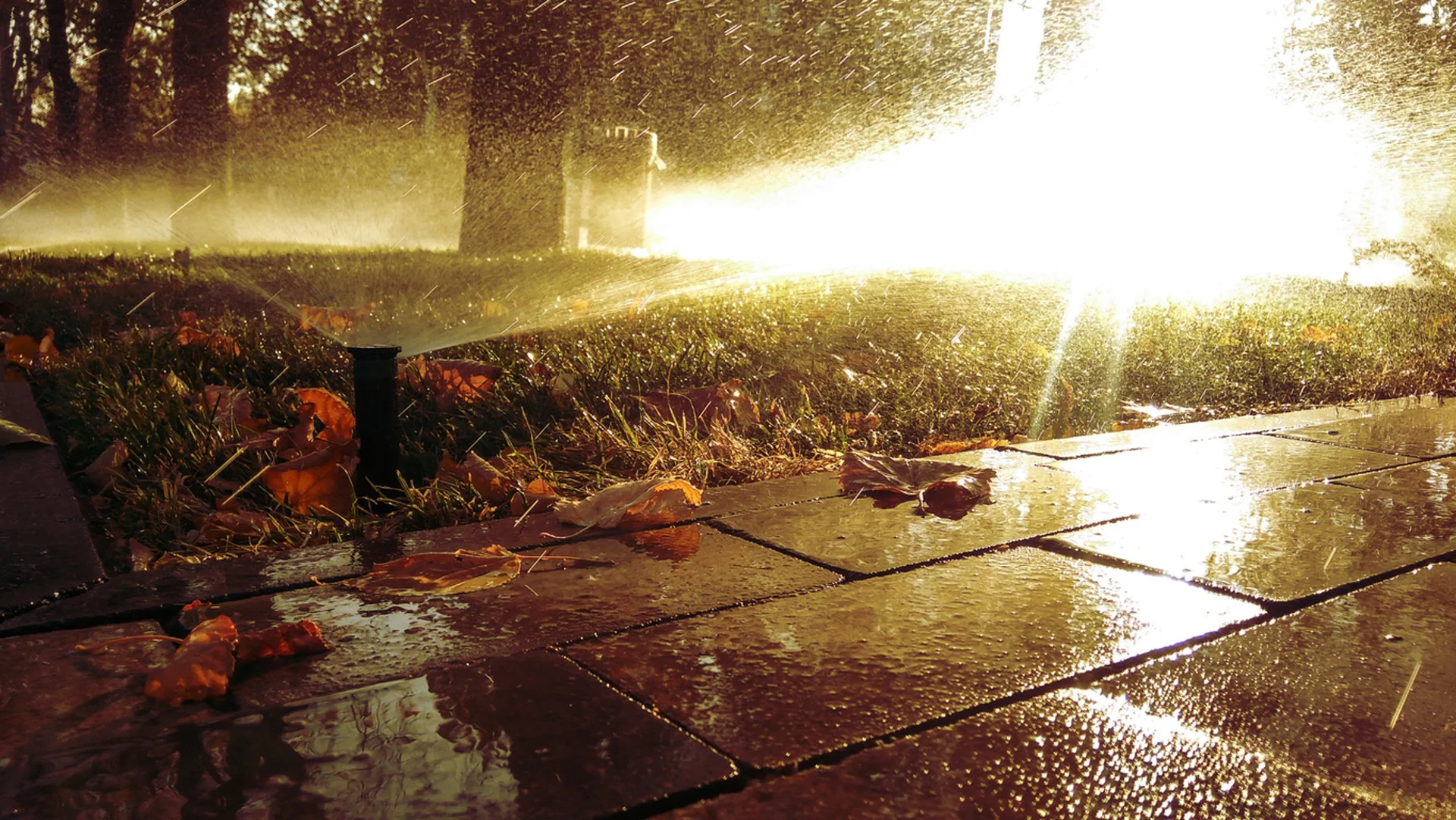
By the time leaves start dropping, most property owners have stopped thinking about their sprinklers. The summer rush is over, the lawn looks fine, and the controller is still running the schedule someone set in June. That quiet stretch is when small oversights tend to add up to spring repair bills.
Late-season irrigation is less about adding water and more about adjusting to what the landscape needs as conditions change.
Why Fall Watering Needs Look Different
Cooler temperatures, shorter days, and lower evaporation all reduce how much water turf and plants use. A schedule built for peak heat can overwater a landscape quickly once nights cool down. At the same time, many lawns are still growing or recovering in the fall, so shutting off the water too early carries its own risks.
How much this matters depends on your climate, grass type, soil, and rainfall. Some of the seasonal adjustments that save water in fall apply almost everywhere, while others depend on how soon your first freeze arrives.
Schedule Mistakes That Waste Water & Stress Turf
Most late-season problems start at the controller. Schedules tend to stay in place long after the conditions behind them have changed.
Leaving Summer Run Times in Place
Running full summer cycles in cool weather can saturate the soil, cause runoff, and keep turf wet longer than it should be. Soil that stays soggy is more prone to fungal problems and shallow roots. It also sends water onto sidewalks and into storm drains, which adds cost without adding value.
A smart controller can make this transition easier, since it responds to local weather instead of a fixed calendar. If your controller is still on a static program, a monthly check through fall can help close the gap.
Shutting Down Too Early
The opposite mistake is turning everything off after the first cool week. Turf that is still growing, newly seeded areas, and recently planted trees and shrubs may still need supplemental water, especially during dry fall stretches. Roots that head into winter dry can be more vulnerable to cold stress.
A better approach is to gradually reduce watering, monitor conditions, and shut down on a planned date.
Equipment Oversights That Surface in Spring
Fall is also the last practical window to find problems while the system is still running. Issues that go unnoticed now often get worse once temperatures drop.
Our technicians commonly see these oversights at the end of the season:
- Aging rain sensors. A sensor that is older than five years, or clogged with debris, may not stop the system during a storm, so it is worth testing or replacing before the next season.
- Skipped leak checks. One broken sprinkler head can waste 18 to 45 gallons of water per zone every time the system runs, and that adds up through the final weeks of operation.
- Overlooked backflow preventers. Annual testing is often required locally, and any dripping or visible damage is easier to address before a freeze.
- Damaged heads left in place. Heads clipped by mowers or crushed during the summer can take on water and crack once it freezes.
- Outdated controller settings. A weak backup battery or an old program can cause the controller to run the wrong schedule without anyone noticing.
Walking each zone one more time before shutdown gives you a clear list of what needs attention. Addressing irrigation repairs now and scheduling backflow testing while the system is still active usually makes spring startup simpler.
Winterization Timing Mistakes
Waiting for a freeze warning to schedule winterization is one of the more common late-season errors. Service calendars fill quickly once cold weather is in the forecast, and a hard freeze can arrive before your appointment does. Water left in pipes, valves, and above-ground components can expand and crack them, and that damage often stays hidden until spring.
The sequence matters, too. Knowing when and how to protect your system can help you decide whether a DIY blowout is realistic, since excess air pressure can damage fittings and heads. Our winterization service includes shutting off the water supply, draining the system, assessing its condition, and leaving an estimate for any repairs.
Requirements vary by region, and systems in milder climates may need only partial protection during an occasional cold snap.
Drainage & Debris Problems That Build Over Fall
Leaves and debris can clog catch basins, channel drains, and downspout lines just as fall rain arrives. Water that cannot move away from the foundation or low spots can saturate soil that the irrigation system has already stopped drying out.
Clearing drains is a simple first step, and it connects to the drainage problems that tend to show up in the fall and winter. If water still pools after a storm, it may indicate a larger issue that drainage solutions can address before the ground freezes.
Getting Your System Ready for Winter
A strong end to the irrigation season usually comes down to three habits: adjusting the schedule as conditions change, fixing known problems while the system still runs, and booking shutdown service early. These steps are far easier to handle on your own timeline than during a spring emergency.
At Conserva Irrigation, we help residential and commercial property owners close out the season with repairs, backflow testing, winterization, and a free sprinkler system inspection for new customers. Many property owners also add a maintenance package, so seasonal service is already on the calendar.
Call (804) 353-6999 or find a location to schedule your fall irrigation service.
