


Beneath Your Feet: The Foundation of Landscape Success
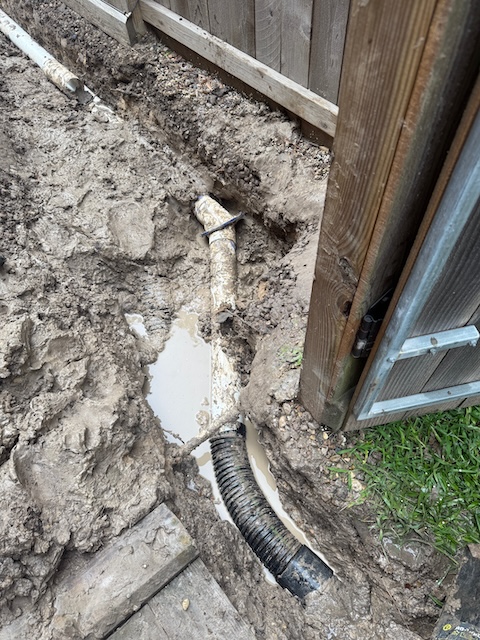 Let's talk about the ground beneath your grass – your soil. In North Houston, we mostly have clay soil. Think of it like this: imagine a sponge that's really dense. It can hold a lot of water, but it takes a while to soak it up. That's clay soil in a nutshell. It holds onto water tightly, which can be good, but it also means water doesn't drain away quickly. This is why it can be tricky to get watering just right – leading to problems with both overwatering and underwatering. But here’s another challenge: as the water evaporates, the clay shrinks. The challenge is how to keep enough moisture in the ground to provide what the grass and plants need without it being too wet or too dry.
Typically, when the sprinklers get turned on in the spring, the program is set to run for several minutes. It seems in the Houston area, sprays are run for 10-12 mins and rotors are run for 20+ mins. But is that correct? In the spring, you might need more water as plants are actively growing, but by summer, the high evaporation rates mean your spring watering schedule isn’t sufficient to keep up with the drying ground. In the fall or winter, when it's cooler and things aren't growing as fast, that same amount of water can be way too much. Those springtime settings will not keep up with the heat of summer, and things will start dying. Now factor in the clay that we walk on. It can only absorb so much water so quickly. Have you noticed that after about 7-8 minutes the water seems to simply run off and down the street? The clay soil cannot absorb the water fast enough to keep up with the precipitation rates of the sprinklers! So…what do we do?
Decoding Houston Soil: A Moisture Management Masterclass
So, we've talked about how our clay soil is like a dense sponge – great at holding water, but slow to soak it up. This means that getting your watering right is super important for a healthy lawn. If the water can't soak in properly, it just sits on top or runs off, and your plants don't get the drink they need. Plus, this clay can get compacted – squished down tight – which makes it even harder for water and air to reach the roots.
What's the secret to dealing with this tricky soil? Well, think of it like this: you need to help your soil breathe and drink! Experienced lawn pros around here recommend a few things to loosen up that clay and help it absorb water better. Adding stuff like compost (those bags of decomposed leaves and stuff you see at the garden center) can really improve the soil's texture. Also, core aeration (poking little holes in the ground) helps break up the compaction and lets water and air get down to the roots. It's like giving your lawn a mini-spa treatment!
Irrigation Best Practices: Navigating North Houston's Unique Landscape
Okay, so how do we actually water our lawns in North Houston without drowing them or letting dry out completely? The trick is to water smart, not just alot. Remember that slow-soaking clay? That means we need to give it some extra time to soak up the water being applied. One of the best ways to do this is a method called ‘cycle-and-soak’. Instead of one long watering session, you break it up into shorter bursts, giving the soil a chance to catch up. Think of it like sipping a drink instead of gulping it down – less mess, more hydration! This method is typically used on sloped areas where 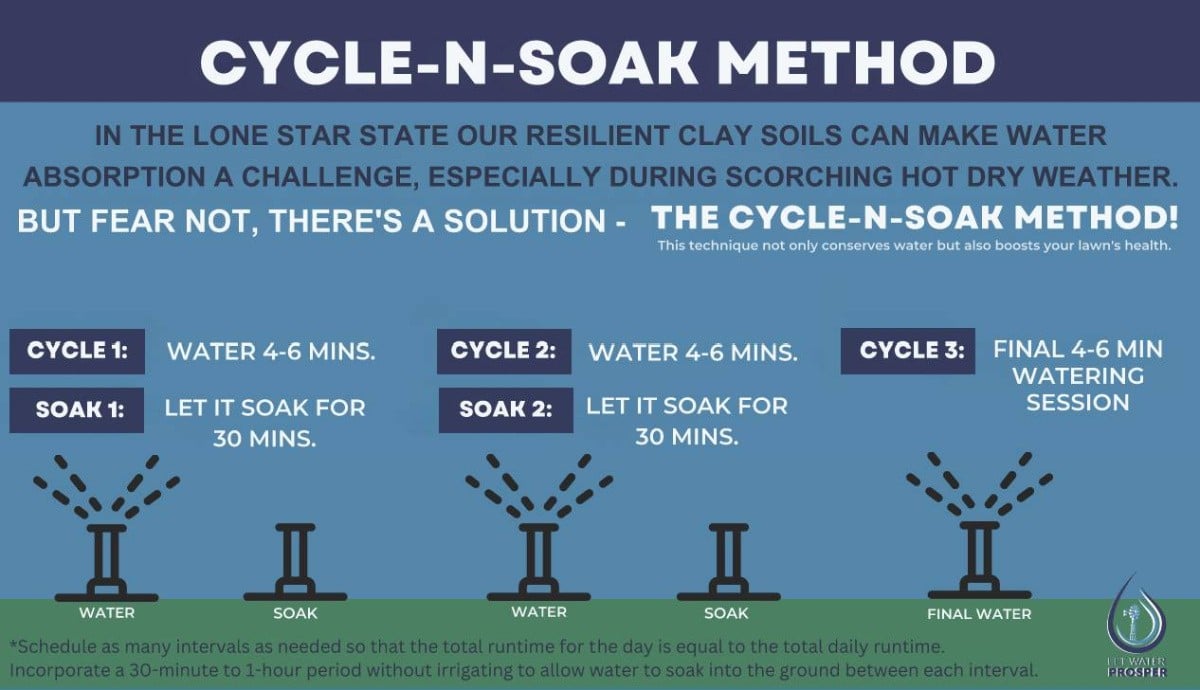 water wants to run downhill, but it’s a principle that works well with slow absorption on flat ground as well.
And the good news is, there's some cool technology out there that can help us with this. Drip irrigation is great for flowerbeds and gardens because it delivers water right to the roots, where it's needed. And those smart sprinkler controllers? They can actually figure out how much water your lawn needs based on the weather and your soil, and adjust the watering schedule automatically. Plus, don't forget about mulch! Spreading a layer of mulch around your plants helps keep the soil moist and prevents water from evaporating so quickly."
Strategic Soil Management: Beyond Basic Watering
So, as you can see, understanding your soil is about more than just watering! It's about creating a healthy foundation for your whole yard. If you're curious about what's going on under the surface, consider getting a soil test. (check out the Texas A&M soil testing lab at https://soiltesting.tamu.edu) It can tell you what nutrients are missing and how to improve the soil's texture.
Ultimately, the best approach is to work with our Houston soil, not against it. That means choosing the right plants, improving the soil with things like compost, and watering wisely. By taking a holistic approach, you can create a beautiful, sustainable landscape that thrives in our unique environment.
And hey, if you're feeling overwhelmed or just want a little help figuring out the best way to tackle your irrigation challenges in North Houston's tricky clay soil, give us a call at Conserva Irrigation. We're happy to offer a free consultation and help you create a watering plan that's perfect for your lawn!
Note: Cycle-N-Soak image from https://www.frisco.com/msg/cycle-soak-method-water-landscape.php?p=1775509
