Houston Backflow & Compliance Requirements for Commercial Irrigation
Houston’s Cross Connection Control Program (CCCP), administered by Houston Public Works, requires installation, maintenance, and annual testing of backflow prevention assemblies on all irrigation systems connected to the public water supply. This isn’t a recommended practice. It’s a legal obligation enforced under Texas Administrative Code Title 30, Chapter 290. Houston Water issues annual notices and tracks compliance at the property level.
Testing must be performed by a TCEQ-licensed Backflow Prevention Assembly Tester (BPAT) listed on Houston’s Cross Connection Control Program Backflow Testing Company List, updated monthly. Non-compliance can result in fines of up to $2,000 per day and suspension of water service to the property. When drought contingency stages are active, Houston Public Works can restrict irrigation to specific days and time windows. Smart irrigation systems that automatically adjust to those restrictions help commercial properties avoid violations without requiring manual intervention from property staff.
Commercial Properties That Benefit Most
Modern irrigation systems deliver measurable benefits across a wide range of commercial property types. Business parks, HOAs, hospitals, universities, and hospitality facilities in North Houston benefit from multi-zone automation, weather-sensor integration, and smart scheduling that reduces both water waste and staff oversight. Through adaptive scheduling and efficient sprinkler systems, these properties maintain compliance and control costs while sustaining strong curb appeal.
Retail centers and schools face high-foot-traffic conditions where overspray onto sidewalks, parking areas, and building surfaces must be controlled through precise spray pattern calibration. Industrial and warehouse properties with perimeter landscaping often carry the highest zone counts and benefit most from remote monitoring and controller-based scheduling. Property managers overseeing multiple sites can use smart irrigation platforms to monitor system performance and water use across locations from a single interface, reducing the coordination burden on facility teams.
Discover comprehensive irrigation solutions and local knowledge tailored to your commercial property. Connect with our team online or call (832) 979-6895 to get started.
Our Five-Step Commercial Irrigation Process
Conserva Irrigation of North Houston follows a structured five-step approach to deliver consistent system performance and measurable water savings across commercial properties of all sizes.
- Assess: We begin with a full evaluation of your irrigation system, generating a System Efficiency Score (SES) and a clear action plan that gives property managers a documented starting point.
- Repair & Adjust: Our technicians correct leaks, replace faulty components, and calibrate system pressure for uniform coverage across every zone.
- Optimize: Nozzle placement and zone timing are fine-tuned to deliver even water distribution across diverse commercial landscapes, from turf areas to entrance plantings and shrub beds.
- Retrofit: Outdated controllers are upgraded to smart systems that respond to real-time weather and soil data, with water use reductions of up to 60% in many systems.
- Maintain: We provide tiered maintenance plans with regular inspections, structured to align with commercial property schedules and minimize disruption to normal operations.
Why Choose Conserva Irrigation of North Houston for Commercial Irrigation in Houston
Commercial property managers need an irrigation partner that handles compliance, efficiency, and landscape performance without adding to the administrative load. Here’s what sets our approach apart:
- Water efficiency benchmarking: Every system is evaluated and optimized against the System Efficiency Score (SES), giving property managers a measurable baseline and a clear record of improvement.
- Smart irrigation technology: Retrofitting outdated controllers to smart systems that adjust automatically to weather and soil conditions is a core part of our service model, not an optional add-on.
- Customized service plans: Each plan is adapted to the property’s specific layout, usage patterns, zone count, and local Houston regulations.
- Proactive maintenance: Our five-step process and tiered maintenance plans address causes before breakdowns occur rather than reacting after failures.
- Satisfaction guarantee: We back every commercial irrigation engagement with a satisfaction guarantee.
We also help property teams coordinate compliance documentation, backflow inspection scheduling, and drought-restriction adjustments. This reduces the administrative load on facility managers and helps keep properties in good standing.
North Houston Climate & Soil Conditions
Houston’s subtropical climate combines an extended growing season with periodic drought, heavy rainfall events, and occasional hard freezes that affect above-ground backflow assemblies and exposed components. Systems that can’t adapt to those swings waste water during wet stretches and stress landscapes during dry ones. Our climate-responsive smart systems adjust automatically to rainfall and temperature changes, supporting landscape health through Houston’s variable weather cycles without requiring manual schedule changes from property staff.
Soil conditions across North Houston require site-specific design. Clay-heavy soils common in parts of Harris County retain moisture and are prone to waterlogging when systems aren’t calibrated correctly. Before installation or a major system retrofit, we assess soil characteristics to set zone run times and precipitation rates that promote healthy root hydration without creating runoff or saturated turf. During active drought contingency stages, properly programmed smart systems maintain compliant watering schedules automatically.
Financial Considerations for Commercial Irrigation Upgrades
Smart controller upgrades and broader irrigation efficiency improvements reduce commercial water bills over time by eliminating overwatering and schedule waste. For many commercial properties, operational savings from reduced water consumption can help offset upgrade cost. Compliance is also a direct financial consideration: non-compliance with Houston’s backflow testing requirements can expose a property to fines up to $2,000 per day, making a well-serviced, compliant system a straightforward form of liability management.
Some regional water authorities and utility districts serving the greater Houston area may offer water-efficiency incentive programs, though available programs vary by district. Commercial property managers should check with their specific water provider to identify what’s currently accessible. Improving documented water efficiency can also support a property’s sustainability reporting and ESG goals, which are increasingly relevant to tenants, investors, and lenders evaluating properties in this market.
For businesses exploring installation, learn more about our irrigation installation services. For properties with existing systems, our irrigation repair solutions and drip irrigation upgrades help maintain performance and compliance across all seasons.
Frequently Asked Questions About Commercial Irrigation
1. What Backflow Prevention Requirements Apply to Commercial Irrigation Systems in Houston?
Houston’s Cross Connection Control Program requires that backflow prevention assemblies on all irrigation systems connected to the public water supply be tested annually by a TCEQ-licensed Backflow Prevention Assembly Tester. Testing companies must appear on Houston Public Works’ approved list, updated monthly. Non-compliance can result in fines up to $2,000 per day and potential service interruption, making annual certification a critical obligation for commercial property managers.
2. What Are the Benefits of Incorporating Smart Technology into an Existing Irrigation System?
Smart irrigation integrates weather and soil sensors that automatically adjust watering schedules, preventing overwatering during rain events and conserving water during dry spells. For commercial properties, this means reduced utility costs, consistent landscape performance, and support for compliance with drought-contingency watering restrictions without requiring manual schedule changes from property staff.
3. How Often Should a Commercial Irrigation System Be Inspected?
Most commercial systems benefit from seasonal inspections: once in spring before peak demand and once in fall to prepare for cooler months and assess any freeze-related wear. Larger properties or those with complex multi-zone layouts may need more frequent monitoring to catch pressure issues, leaks, or controller drift before they affect the entire system.
4. Why Is Water Conservation Important for My Business?
Efficient water management reduces operational costs, supports sustainability and ESG reporting goals, and aligns with Houston’s water conservation initiatives. It also reduces exposure to compliance fines and can position commercial properties favorably with tenants and investors who evaluate environmental stewardship as part of their decision-making.
Sustainable Commercial Irrigation Solutions for Businesses
Every commercial property in North Houston depends on reliable irrigation to protect its value, appearance, and operational standing. Conserva Irrigation of North Houston combines local knowledge with advanced water management technology to help businesses meet landscape, compliance, and sustainability goals with precision and consistency. From system design and maintenance to smart-controller retrofits that can measurably reduce water use, our approach delivers lasting results aligned with Houston’s climate and water regulations.
Ready to lower your water bills and stay ahead of local compliance requirements? Connect with our team online or call (832) 979-6895 for a consultation.




 What's Your Water IQ?Water is one of the earth's most abundant resources, yet it's also one of the most precious and unfortunately, one of the most often wasted. To understand our passion for water conservation, consider these facts.
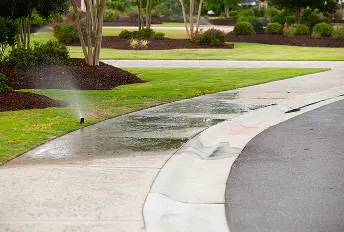 Products & PartnershipAt Conserva Irrigation®, we pride ourselves on offering the best irrigation and water conservation products available. That's why we're happy to partner with Toro and Hunter, the leaders in turf and landscape maintenance. We work together to bring you beautifully green lawns with less waste.
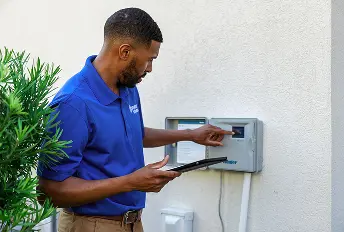 Hunter Hydrawise ControllerThe Hunter Hydrawise Wi-Fi Controller is the most advanced sprinkler system controller on the market. The Hydrawise controller uses real-time local weather data to automatically adjust your watering schedule, so your yard gets watered only when it's needed and never when it's not.