

Many homeowners want to convert their landscape beds to drip irrigation to save water, improve plant health, and reduce runoff. However, one challenge we often run into is that the existing sprinkler system wasn't designed with enough zones to properly separate turf irrigation from landscape irrigation.
That's exactly what we solved on this project.
The Problem
This property's front yard was a great candidate for drip irrigation, but the existing sprinkler system didn't have enough available zones to control the landscape beds separately from the lawn.
Drip irrigation and spray irrigation have very different watering requirements:
- Turf typically requires higher flow rates.
- Landscape beds need slower, more targeted watering.
- Running both on the same zone often leads to overwatering or underwatering.
- Water efficiency suffers when different plant types share the same irrigation schedule.
To properly convert the front yard landscape beds to drip irrigation, we first needed to create two additional irrigation zones.
Step 1: Installing New Irrigation Valves
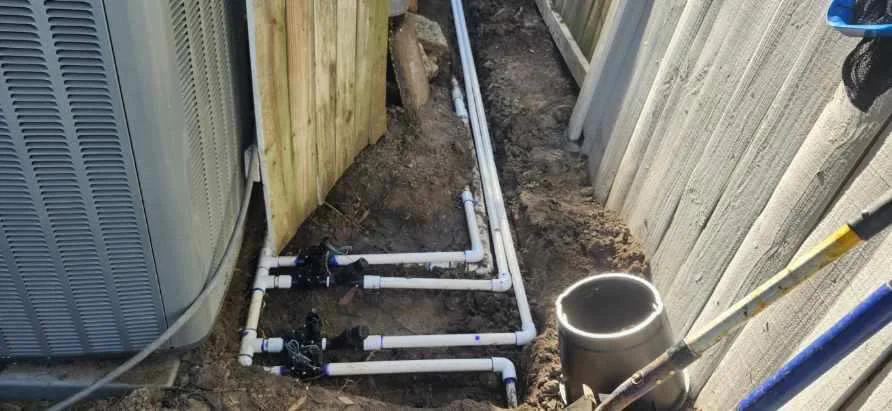
We excavated next to the existing valve manifold and installed two new irrigation valves.
The new valves were housed in separate valve boxes to provide future access for maintenance and repairs.
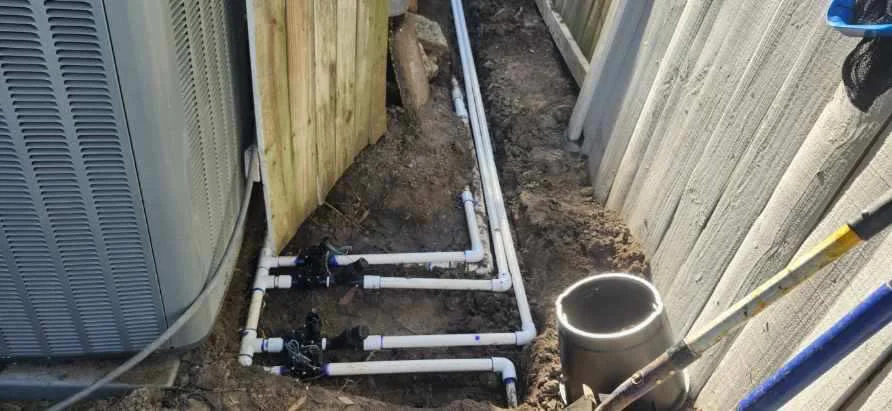
The additional zones give us the flexibility needed to independently control irrigation schedules for different landscape areas.
Step 2: Extending Mainline and Lateral Piping
Once the valves were installed, we trenched and routed new PVC piping through a narrow side-yard access area.
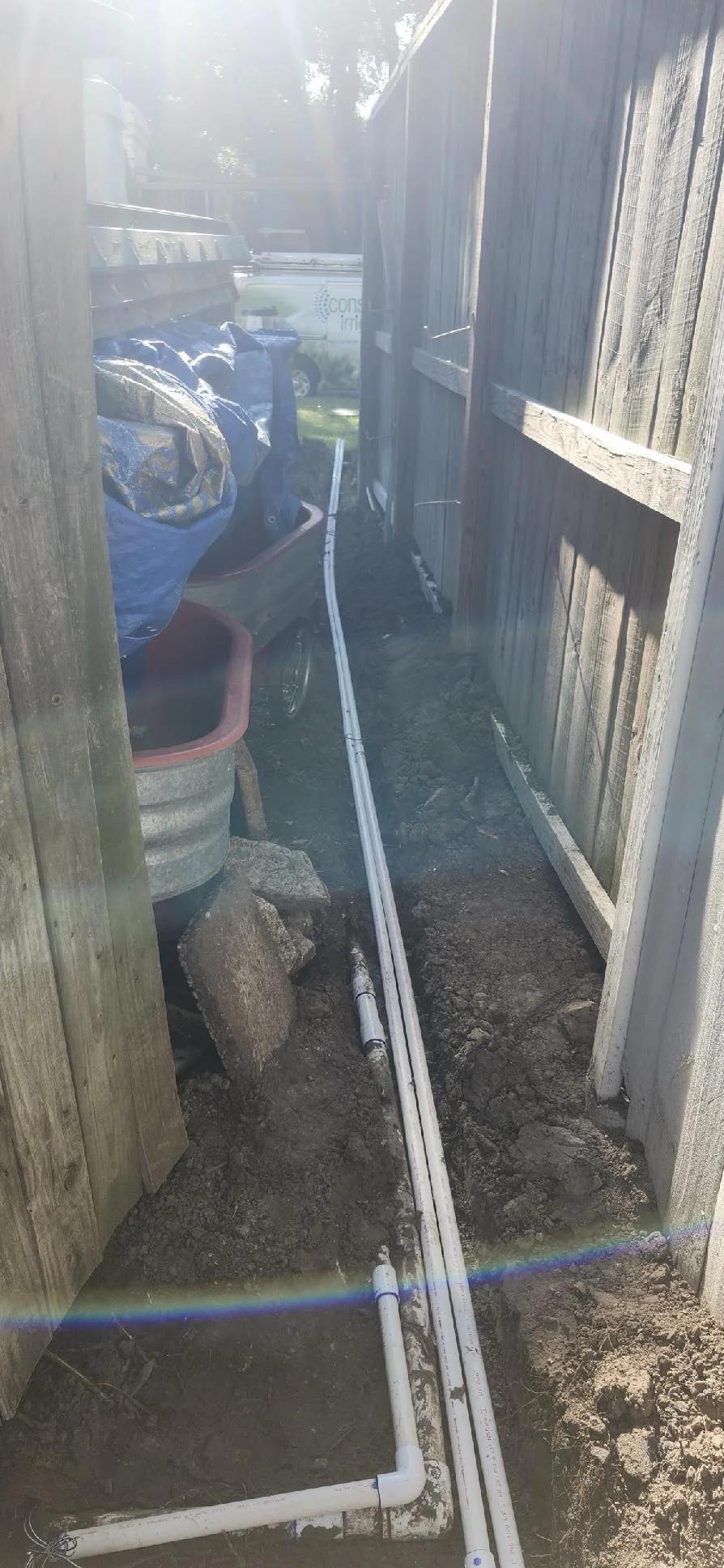
This portion of the project required careful excavation due to limited working space between the fence and air conditioning equipment.
The new piping creates dedicated supply lines for the future drip irrigation zones.
Step 3: Wiring and Controller Integration
Adding new zones isn't just plumbing work.
Each new valve required:
- New control wiring
- Waterproof wire connections
- Integration into the irrigation controller
- Testing to ensure proper operation
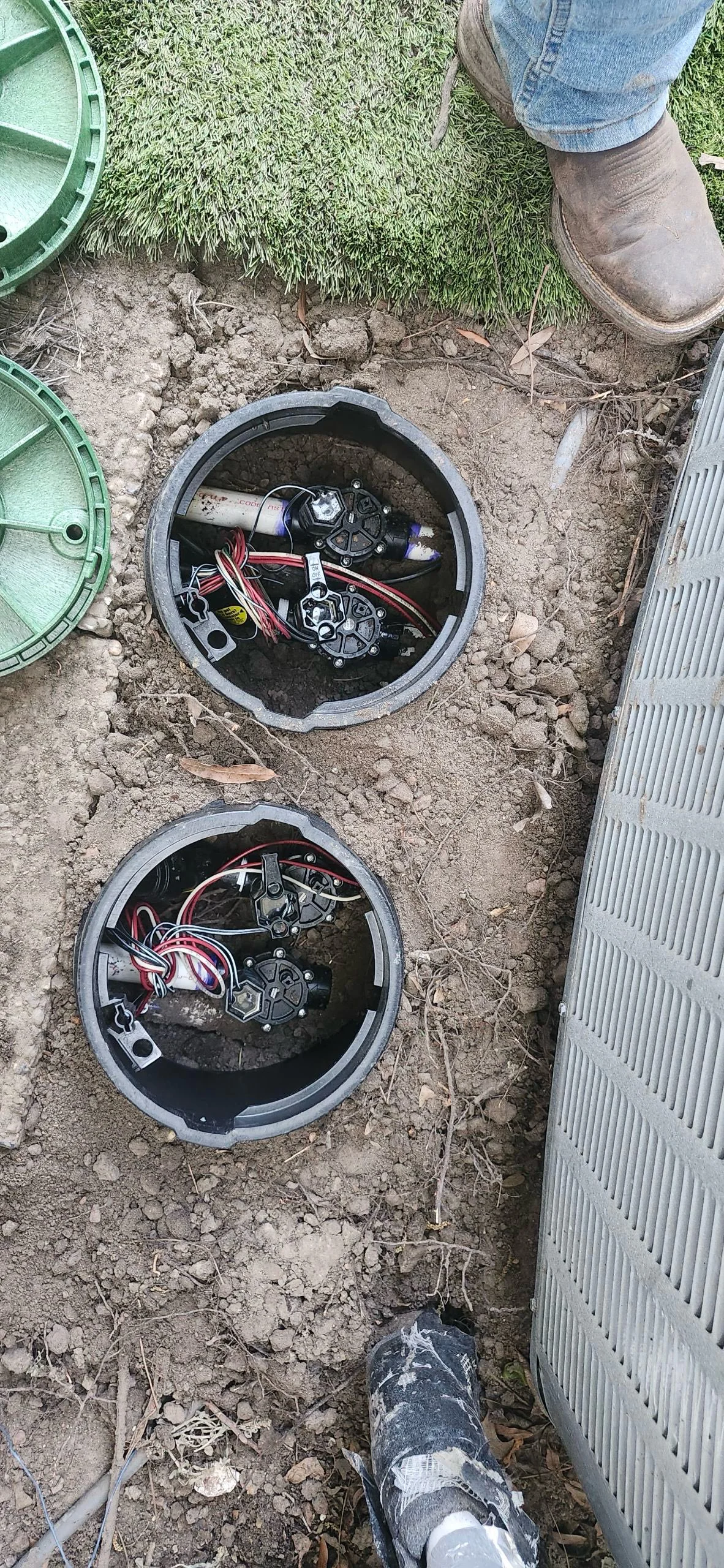
Proper wiring is critical for long-term reliability and helps prevent future troubleshooting issues.
Step 4: Pressure Testing and System Verification
Before backfilling, we tested the new piping and valves to verify:
- No leaks
- Proper valve operation
- Correct controller communication
- Adequate pressure for the future drip system
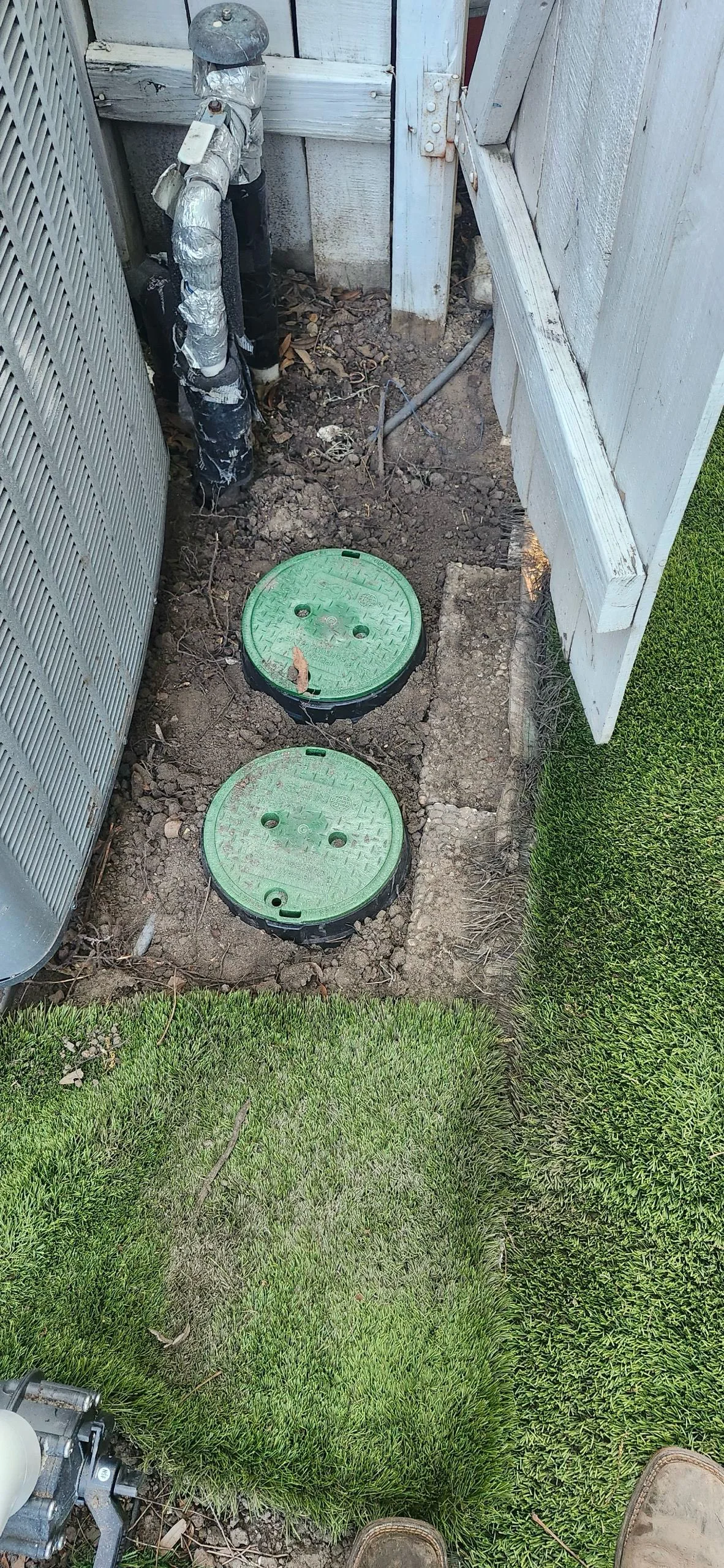
Testing before restoration helps ensure the system performs as expected once the landscape is fully restored.
The Result
After adding two new irrigation zones, the property is now ready for a front yard drip irrigation conversion.
Benefits include:
✅ Improved water efficiency
✅ Reduced runoff and overspray
✅ Better plant health
✅ More precise irrigation scheduling
✅ Lower water waste
By separating landscape beds from turf irrigation, the homeowner will have much greater control over how water is applied throughout the property.
Is Your Irrigation System Ready for Drip?
Many older irrigation systems were designed before drip irrigation became common in residential landscapes. If you're considering converting flower beds, shrubs, or foundation plantings to drip irrigation, additional zones may be necessary to achieve the best results.
At Conserva Irrigation of Katy & West Houston, we specialize in irrigation system upgrades, drip irrigation installation, valve manifold rebuilds, sprinkler system modifications, and water-saving irrigation solutions.
If you're looking to reduce water usage while improving the health of your landscape, we'd be happy to evaluate your system and recommend the best approach.
