

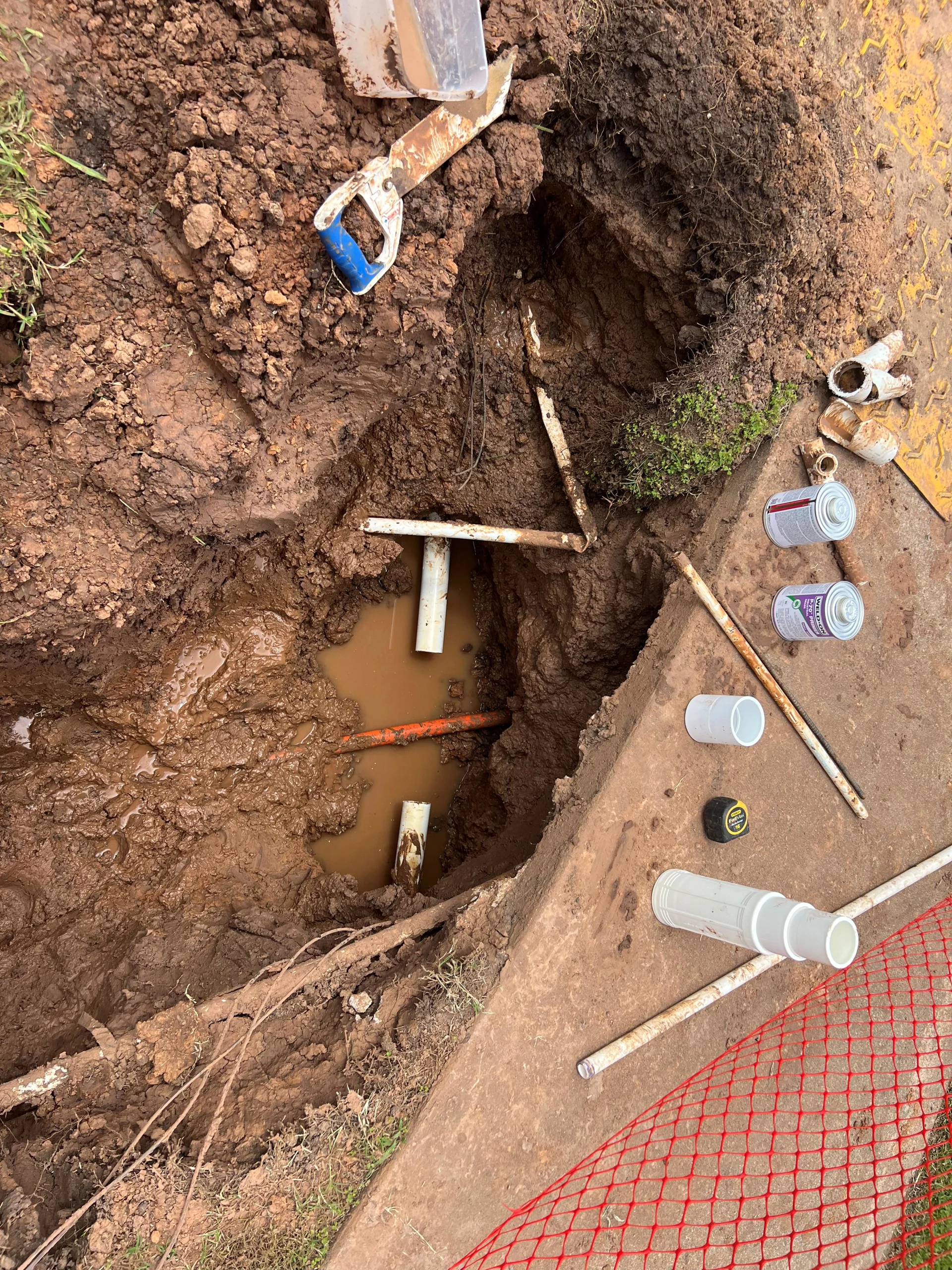
Not every irrigation repair is a simple broken sprinkler head or shallow lateral line. Some jobs require deeper excavation, larger pipe, and more careful access before the actual repair can begin.
This project involved a 3-inch irrigation mainline roughly 5 feet below grade. That is not typical residential sprinkler repair work. A line of that size and depth requires more planning, more careful digging, and enough room around the pipe to complete the repair correctly.
Why a Mainline Repair Is Different
Most homeowners think of sprinkler repairs as work at the head, valve, or shallow lateral line. A mainline repair is different because the mainline carries water to the system before it branches into individual zones.
When a mainline has a problem, the impact can be larger than one broken head. Depending on the system layout, it can affect pressure, water loss, and the ability of multiple zones to operate correctly.
On a deep 3-inch mainline repair, the work is not just about replacing a small section of pipe. The repair area has to be opened safely, the pipe has to be exposed clearly, and the connection has to be made in a way that will hold under system pressure.
Accessing a Pipe 5 Feet Below Grade
The depth of this repair was the biggest factor. At roughly 5 feet down, the crew needed enough excavation space to reach the mainline, inspect the damaged area, and work around the pipe.
This type of repair takes more than a small access hole. The excavation has to provide enough room to clean the pipe, cut out the damaged section, make the repair, and check the surrounding area before backfilling.
That extra access matters. If the work area is too tight, the repair can be rushed, poorly aligned, or difficult to test properly.
Repairing the 3-Inch Irrigation Mainline
Once the mainline was exposed, the damaged section could be addressed directly. Larger irrigation pipe requires the right fittings, clean pipe preparation, and careful alignment so the repaired section can perform under pressure.
The goal is not just to stop the immediate leak. The goal is to restore a reliable section of mainline that can support the irrigation system without creating another weak point.
After the repair is completed, the system should be tested before the area is closed. Testing helps confirm that the repair holds and that the system is ready to return to service.
After testing, the excavation area can be backfilled. On a repair this deep, backfilling is part of the job quality. The area needs to be closed carefully so the repair is protected and the surrounding ground can be restored as cleanly as possible.
Why This Matters for Larger Residential and Commercial-Grade Systems
A 3-inch irrigation mainline is not common on a small residential system. Repairs like this are more typical of larger residential properties, shared landscape areas, HOA systems, or commercial irrigation services setups.
For properties across Katy and West Houston, a mainline issue can waste a significant amount of water and disrupt irrigation performance across a larger area. Handling the repair correctly helps protect the landscape, support water conservation, reduce water loss, and avoid repeat excavation.
Need Irrigation Mainline Repair in Katy or West Houston?
Conserva Irrigation handles irrigation repairs and sprinkler services across Katy and West Houston, from routine head and valve repairs to larger underground pipe and mainline issues.
If your system has unexplained water loss, low pressure, pooling water, or signs of a deeper irrigation leak, schedule a sprinkler system inspection before the issue becomes more expensive to repair.
