

Late September and early October rolls around and half our irrigation customers are booking aeration and overseeding within the same week. This makes sense as it's the best window we get all year for renewing the turf. But almost nobody thinks about their irrigation controller when they're planning this out, and that's usually where things go sideways.
Here's the thing. Aeration and overseeding only pay off if the soil stays moist enough for seed to germinate. Not soaked, not dry — moist, consistently, for a couple of weeks. Most sprinkler systems around Mooresville and the lake are still running whatever program got set up back in June, and that program is wrong for what your newly seeded or aerated lawn might need right now.
Soil Behaves Differently Once You've Aerated It
Aeration consists of pulling little plugs out of the ground, and once you do so, you're opening channels that let air, nutrients and water get down to the roots of your grass instead of running off the surface or sitting there doing nothing. Good move, no argument there. But it also means water passes through faster than it did a week earlier. The ground just doesn't hold onto it the same way.
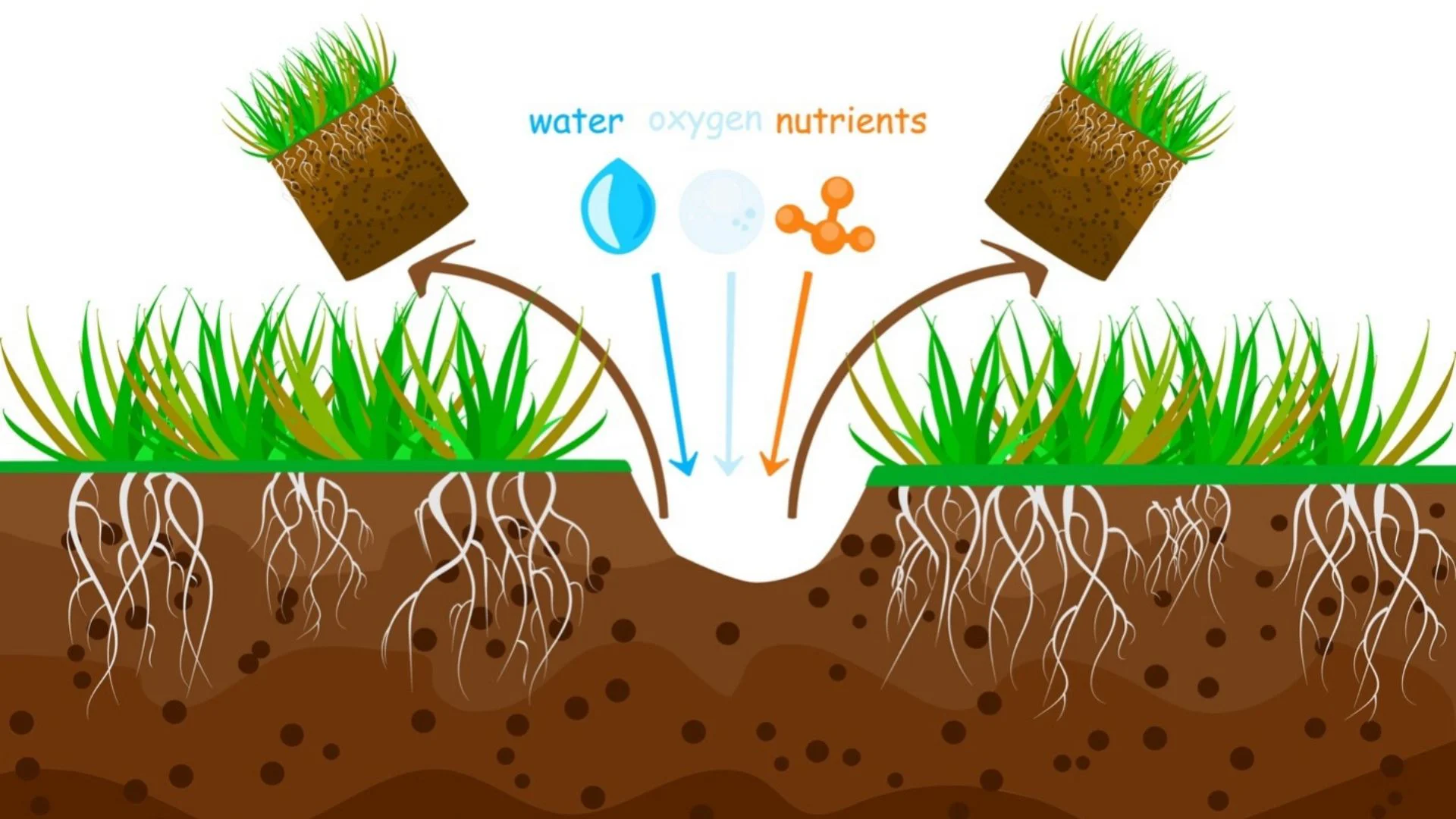
How Core Aeration Works
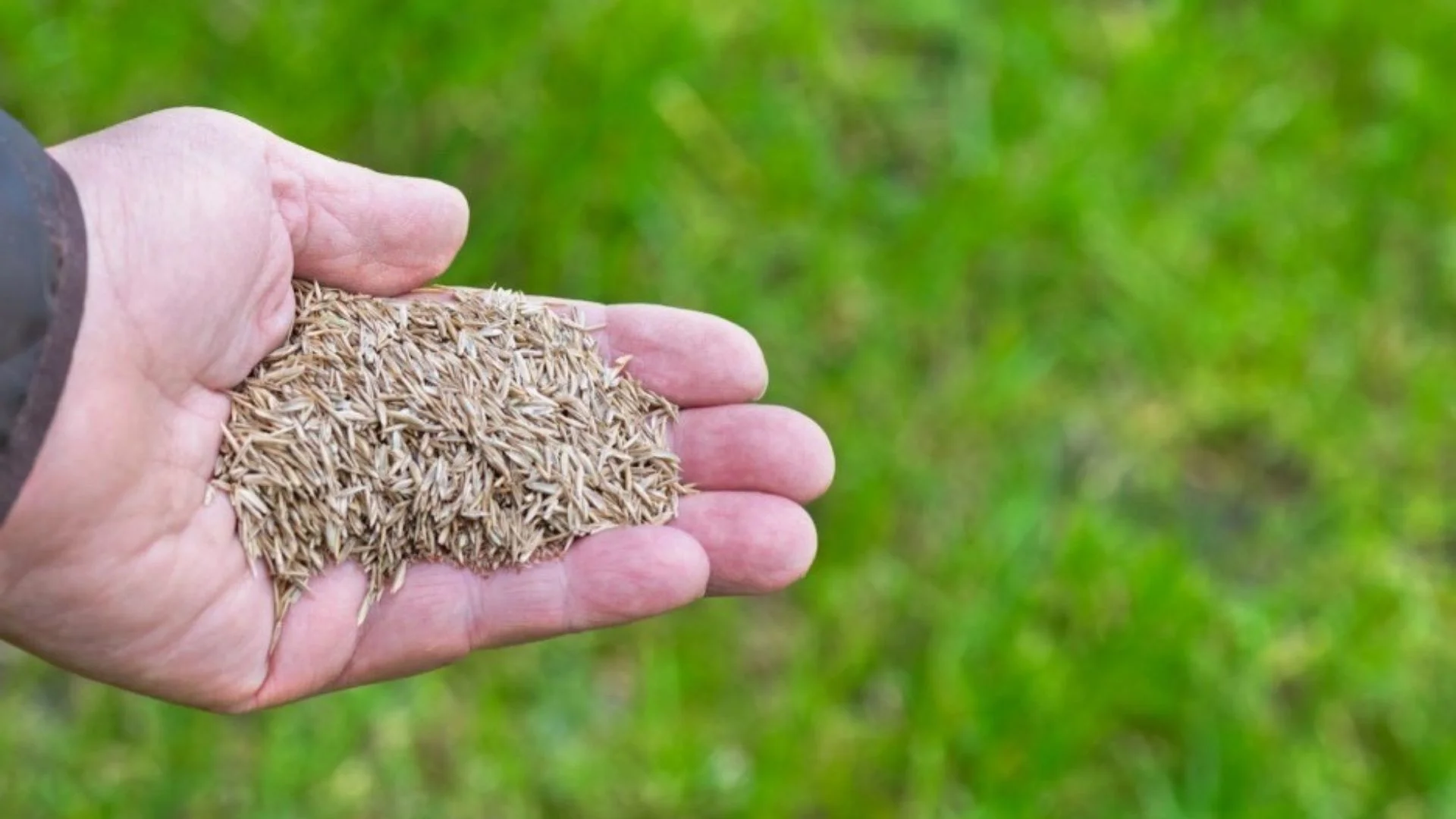
Throw overseeding into the mix and you've got seed sitting basically on top of the soil, exposed, with nothing protecting it from drying out in an afternoon. So, the schedule that worked fine in July — a couple of long soaks a week — stops being as effective the moment that seed hits the ground.
The Mistake We Run Into Constantly
Summer watering is built around deep roots. Long cycles, spaced out, this encourages grass to send roots down deep looking for water. That's exactly what you want for established turf in July and August.
New seed wants the opposite. It needs short bursts of water, several times a day, because it has no root system yet to go looking for moisture on its own. Leave your controller on the summer setting during aeration season and one of two things happens; either the water runs off before it soaks in and the seed just sits there, or the top layer dries out between those long, spaced-out cycles and nothing germinates at all. We see both outcomes regularly, usually a few weeks after someone calls asking why half their new grass never came up.
What We Actually Tell Customers
There's no single perfect schedule since every yard has different soil, slope, and sun exposure, but this is roughly the range we work within for the first few weeks after aeration:
- Run each zone two to four times a day, keeping cycles short — somewhere around five to ten minutes depending on how fast your zones drain. Early morning and midday tend to work better than evening or night watering. Seed that stays wet overnight, especially with the humidity we get off the lake this time of year, is an open invitation for fungus.
- If you notice water pooling or running down the driveway before a cycle finishes, that zone needs to be split into two or three shorter starts rather than one longer one — the ground simply can't absorb it that fast right after aeration. And once the new grass reaches about an inch, you can start backing off, stretching the intervals out and running each cycle a little longer, easing back toward a normal fall schedule over the next few weeks.
- If your system runs on a Hunter Hydrawise or similar smart controller, this is a good use for a saved program. Set up a "new seed" schedule once, and next time you aerate you're just switching to it instead of reprogramming every zone from scratch.
Your Established Areas Still Need Their Own Program
One thing that trips people up: the flower beds and turf that weren't touched during aeration don't need this frequent, light watering. Running the whole property on one blanket schedule usually means either the new seed gets shortchanged or everything else gets drowned trying to compensate. It's worth taking the extra ten minutes to make sure your zones are split out the way your yard is split out.

And Then There's the Weather
Lake Norman weather can be unpredictable in the autumn— dry for a stretch, then a couple days of steady rain out of nowhere. A controller with a rain sensor, or one that pulls local weather data automatically, will skip a cycle when it doesn't need to run, which matters even more right now. Freshly loosened soil plus an unnecessary watering cycle plus a hard rain is a reliable way to wash seed right off the spot you paid to put it.
Worth Getting Right the First Time
Aeration and seed aren't free, and neither is another season of thin, patchy grass because a controller kept running last month's schedule. Honestly, most of this comes down to about twenty minutes of reprogramming at the right time.
If you'd rather not mess with it, or you're not totally sure your current controller can even do what's needed here, that's what we're around for. Conserva Irrigation of Lake Norman offers a free sprinkler system inspection, and we'll walk your zones, check the controller, and get everything dialed in before your seed goes down.
Call us at (704) 960-1565 or schedule online — better to sort this out now than to find out in November that half the aeration and seeding you did didn't take.
