

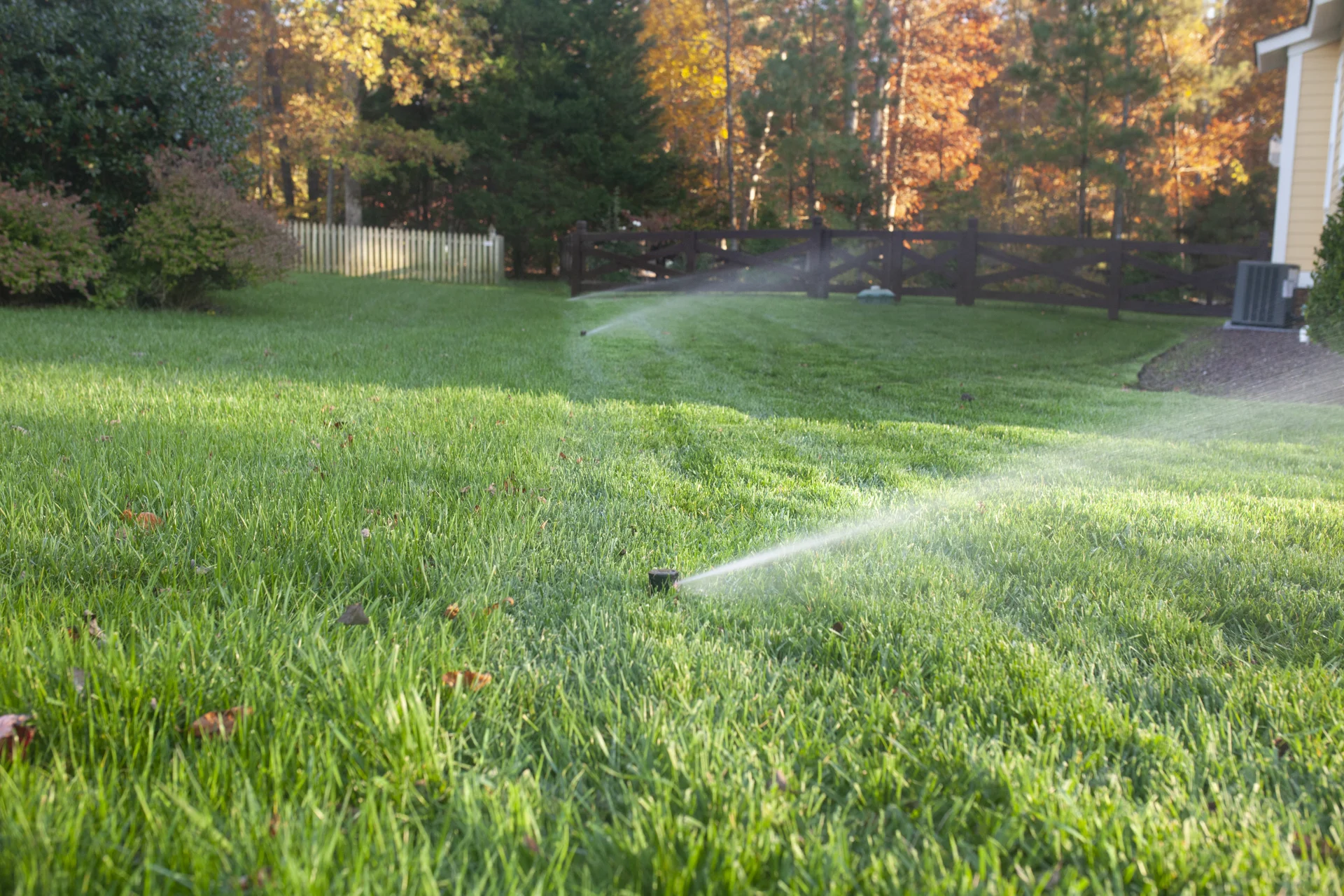
This is a scenario we get quite often: It's early, you've got your coffee, and you're standing at the back door looking out at the yard. Front beds? Wet. Side yard? Wet. The backyard looks like nobody's touched it since July.
Every zone ran but one. Annoying, sure. But honestly, as sprinkler problems go, that's kind of a lucky break.
Why lucky? Because if the rest of the system came on, you already know a bunch of stuff is fine. Water's getting in. The backflow's okay. The timer has power. Whatever went wrong is somewhere between one station on the controller and the heads in that one patch of yard, and that's a much smaller haystack to dig through.

Here's how we'd go at it if we were standing in your yard with you. It's roughly the order our techs check things, plus what you can poke at yourself and where it makes sense to stop and call somebody.
First, Figure Out What "Not Working" Actually Means
Go turn the zone on and watch it for a minute. Seriously. "It's not working" covers a lot of ground, and what you see (or don't) tells you where to look.
- Dead silence. No water, no hiss, nothing moves. Nine times out of ten that's electrical. Think the timer, a wire, or the solenoid sitting on the valve.
- Heads come up but just kind of dribble. Now we're talking pressure. Could be a valve that's only partway open, a cracked pipe, or something clogged.
- A puddle or a little fountain where there shouldn't be one. Broken pipe or a snapped head. Pretty much guaranteed.
- It won't turn off. Technically the opposite problem, but it lives in the same spot. Usually there's junk stuck in the valve or the diaphragm is shot.
- Works one day, doesn't the next. Ugh. These are the worst. Usually, it's a corroded wire splice that only makes contact when the dirt is just wet enough.
Pin that down first and you'll skip a lot of pointless digging.
Start With the Controller
We know. It feels too easy. But a surprising number of "broken" zones we get called out for turn out to be a timer setting.
A few things to look at:
- Does that zone even have a run time anymore? Some older timers lose their programming after a power outage or when the backup battery dies.
- Did somebody turn it down? Maybe a family member, maybe the lawn guys, maybe whoever serviced it last spring set it to zero and forgot.
- Is a rain or moisture sensor set up to skip just certain programs?
- Got a smart controller? Open the app. It might be skipping that zone on purpose because of the weather, and from the patio that looks a whole lot like "broken."
Then run the zone by hand from the controller. Comes on? Great, your hardware's fine and it's a scheduling thing. Still nothing? Keep reading.
Side note: if you've still got one of those old dial timers on the garage wall and you're tired of fighting with it, consider switching to our Hunter Hydrawise smart controller. One thing we like about it is that it'll flag a zone pulling weird current, so you often know something's off before the grass does.
A Bad Solenoid Is the Usual Suspect
Each zone gets its own valve. Sitting on top of every valve is a little cylinder with two wires coming out of it. That's the solenoid. When the timer tells a zone to run, it sends about 24 volts down the wire, the solenoid pulls in, and the valve opens.
When a solenoid dies, the timer is still doing its job. Nobody's listening on the other end, that's all.
If we had to bet on one part, it'd be this one. They get old. They get hot. Moisture creeps into the valve box. And around the lake, those summer thunderstorms don't help one bit, since a strike nearby can cook a solenoid in a hurry.
Want to check it yourself? Find the valve box for the dead zone. Have somebody kick the zone on from the timer while you rest your hand on the solenoid. You're feeling for a faint click or a little buzz. Get nothing, and either it's dead or it isn't getting power. A multimeter sorts out which.
Good news if it is the solenoid: cheap part, usually a quick swap.
Wiring Problems Hiding Underground
Solenoid's fine but no power is reaching it? Then the trouble's in the wire between the timer and the valve. Each zone has its own wire, and they all share one common wire back to the controller.
The usual ways that goes wrong:
- Somebody dug. Fence install, new flower bed, a tree going in, the internet company running fiber, a patio project. If there's been a shovel in your yard lately, that's where we'd look first.
- Splices that rotted out. Connections in the valve box are supposed to be the waterproof, gel-filled kind. Plain wire nuts? Give them a few years in our clay and they'll green up and quit.
- A loose wire at the timer. Garages get hot, then cold, then hot again, and a wire slowly backs out of its terminal.
- Aeration. This is the big one right now. Every September and October, half of Lake Norman gets aerated and overseeded, and those core aerators love grabbing shallow wire and sprinkler heads. Lawn crew leaves, zone four quits. We see it every fall.
Hunting for a broken wire without the right gear is basically guessing with a shovel. We use wire tracers and fault locators that point right at the break, so we aren't trenching across your lawn to find it. And if anybody's going to dig, call NC 811 first. It's the law here, and it beats finding the gas line the hard way.
The Valve Itself Could Be Stuck
Sometimes the solenoid clicks, the wire's good, and the valve still just sits there. Inside it there's a rubber diaphragm and some tiny passages water must get through for the valve to open. Any of these can gum that up:
- Sand or grit, or bits of PVC left behind from an old repair
- A diaphragm that's torn or stiff (common once a valve is pushing ten years)
- The flow control knob cranked all the way closed
That last one catches more people than you'd think. Lots of valves have a little handle on top for adjusting flow. Turn it clockwise till it stops, maybe by accident while you're fiddling around in the box, and the zone either won't open or barely trickles.
Most valves also have a bleed screw or a small lever. Crack it open and the zone should run right there at the valve. If it runs that way but not from the timer, you're back to an electrical issue. If it won't run even then, the problem is inside the valve.
Clogged or Damaged Sprinkler Heads
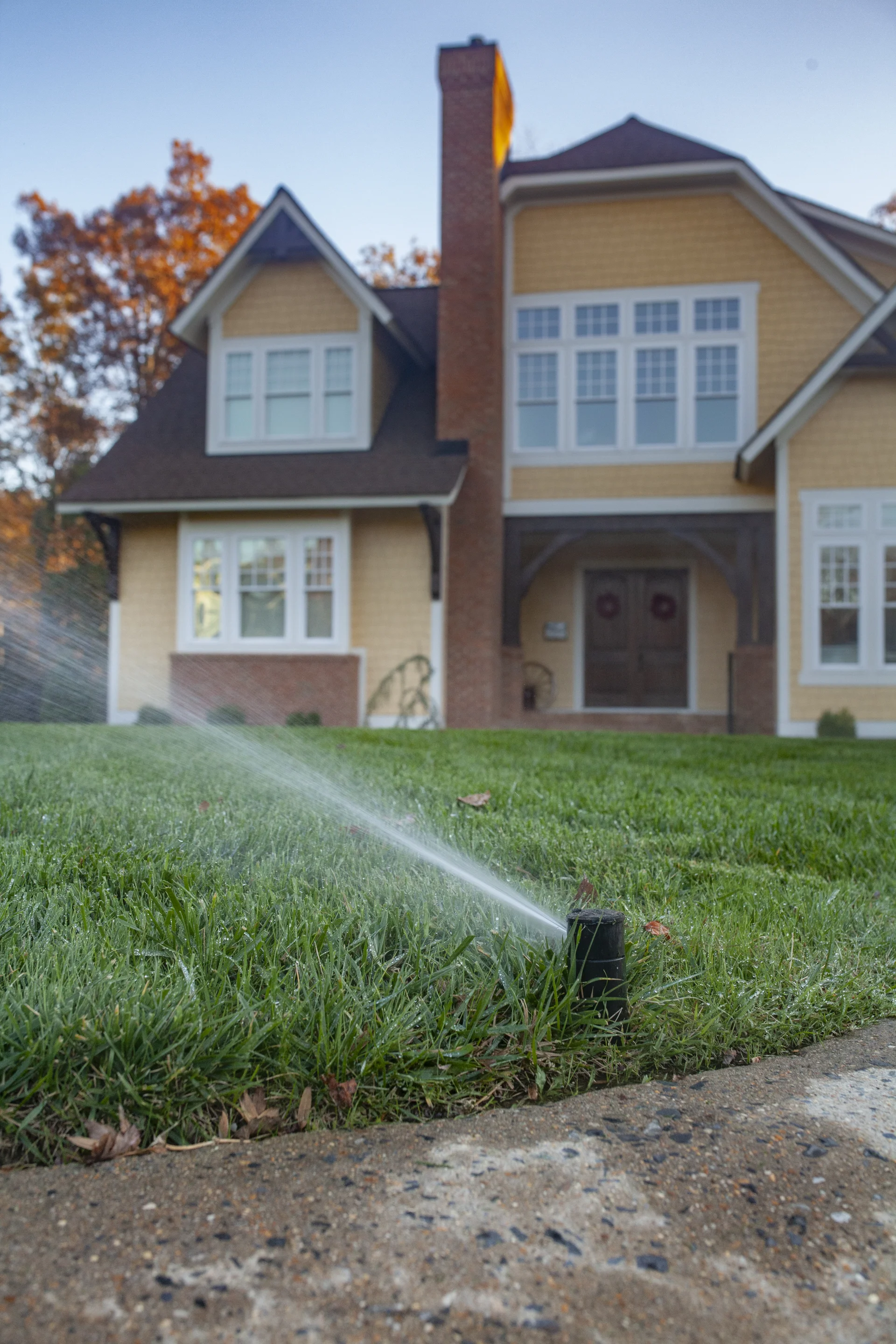
What if the zone comes on but the heads won't pop up or spray right? Then it's time to look at the heads. Turf grows right over the top of pop-ups and holds them down. Nozzles and the little screens under them fill up with grit. Rotors stall out and stop turning. And plenty of heads just get flattened by mowers, cars, or a delivery van cutting the corner.
Here's a sneaky one, though. One snapped head can dump so much water that nothing else on the line builds enough pressure to pop up. So, the zone looks totally dead, when really there's a single broken head gushing away behind a shrub. Walk the whole zone while it's running before you decide anything.
A Broken Lateral Line
Lateral lines are the pipes running from the valve out to each head. They're usually poly or PVC, and they aren't buried very deep. When one cracks or pulls apart at a fitting, the water quits trying to reach the heads and soaks into the ground instead.
Things that point to a lateral break:
- A wet spot that never dries out, even on days you don't water
- A dip or soft, sunken patch in the lawn
- Heads near the valve do okay, but the ones at the end barely spit
- Muddy water coming out of the heads after something's been repaired
Tree roots break a lot of these lines around here, willow oaks and maples especially. Their roots wander a long way, and a pipe that's always a little damp on the outside draws them in.
Low Water Pressure Within the Zone
Not every bad zone is a dead zone. Sometimes it runs, it just doesn't cover. That's usually a pressure or flow thing. Maybe the zone had too many heads from day one. Maybe someone kept adding heads over the years and never rebalanced anything.
Or the classic: sprays and rotors on the same zone. They put water down at completely different rates, so part of the yard drowns while the rest stays dry. That's not really a repair. It's a design fix, and it usually means splitting the zone or swapping heads so everything on it matches.
Why Lake Norman Yards Are Prone to These Problems
Some of this is just where we live.
The red clay. It holds water right up against wire splices and valve bodies, which speeds up corrosion. It also swells when it's wet and shrinks when it dries, and fittings don't love getting squeezed back and forth.
Lightning. Summer storms roll across the lake regularly. A strike nearby can send a surge into the timer and fry a solenoid or a single station's output.
Construction everywhere. Mooresville, Denver, Sherrills Ford, pretty much every town around the lake is building. Utility crews and neighbors' projects cut a lot of irrigation wire.
Those few cold nights. We don't get Ohio winters, but a couple of hard freezes is all it takes to crack a valve or backflow that wasn't prepped. That's the whole reason southern winterization is worth doing here, even if it feels like overkill.
What You Can Safely Check Yourself
Before you call anybody, here's what we'd try:
- Check that the zone has a run time and sits in an active program.
- Run it manually from the timer.
- Make sure that zone's wire is tight in the terminal strip.
- Pop open the valve box. Look for damage, standing water, or loose connections.
- Have someone start the zone while you feel for the solenoid click.
- Check that the flow control knob isn't screwed all the way down.
- Try opening the valve by hand with the bleed screw or lever.
- Walk the zone while it runs and look for broken heads, geysers, or puddles.
Still stuck? Or did you figure out it's a cut wire somewhere under the lawn? That's usually the point to hand it off.
When It's Time to Call a Pro
Some of this just isn't worth giving up a Saturday. We'd get help if:
- The valve isn't getting power, and you can't find the break
- Two or three zones start acting up around the same time
- The valve itself needs replacing (that means cutting and gluing pipe, usually in a cramped box)
- You can't even find the valve box. Happens a lot in older neighborhoods, where boxes got buried under mulch or sod years ago
- Your water meter spins when nothing's running, which can mean a mainline leak
This is what our techs do all day as part of our irrigation repair service. The trucks carry wire tracing equipment plus the common valves and solenoids, so most zones get fixed on the first trip. New to Conserva? You might qualify for a free sprinkler system inspection, where we go through the whole system, so the next problem doesn't sneak up on you. One catch: the system should be running for that inspection, so we'd fix the dead zone first.
Don't Let a Dead Zone Linger Into Winter
It's the middle of October. The grass is slowing down, it's cooler out, and a lot of folks figure the broken zone can wait till spring. We get it.
The thing is, a stuck valve or a cracked line rarely stays the same over winter. Water sitting in a damaged pipe can freeze and split it further. A valve that isn't sealing right may not drain the way it should when you winterize. Then April rolls around, everybody calls at once to start their systems back up, and you're on a waiting list while the backyard browns out.
Fix it now and you're winterizing a system that works. And if you'd rather not think about any of this again, our maintenance packages roll spring startup and winterization together and take a little off repair, so small stuff gets caught early.
Frequently Asked Questions (FAQ’s)
Can a bad controller cause just one zone to stop working?
Yep. Every station on the timer has its own output, and one can go bad (a power surge is the usual culprit) while the rest keep working fine. A tech can check the voltage at that terminal to be sure. If that's what happened, moving the wire to a spare station can buy you some time.
How much does it cost to fix one sprinkler zone?
Hard to say until you know what broke. Swapping a solenoid or fixing a timer setting is on the cheap end. Tracking down a cut wire or replacing a whole valve takes longer and costs more. Whoever you call should tell you what's wrong, and what it'll run, before they start.
Why did my zone stop working right after my lawn was aerated?
Aerators punch holes a few inches deep, and they have no idea where your sprinkler stuff is. Check for busted heads first, then think about a wire or pipe that got hit along the aerator's path. Next year, flag your heads before aeration day. It really does help.
Is it safe to keep running the rest of the system if one zone is broken?
Most of the time, sure, if the broken zone isn't leaking or stuck on. If water keeps running or pooling, shut off the irrigation supply until it's fixed. Otherwise, you're paying for water that's soaking your foundation or washing out your pavers.
Can I replace a sprinkler valve myself?
You can, if you're comfortable cutting and gluing PVC and making waterproof wire connections. Just know that valve boxes tend to be tight, buried, and old, and one bad glue joint can leave you worse off than when you started. Most people end up glad they let someone else do it.
If one of your zones has gone quiet, give Conserva Irrigation of Lake Norman a call at (704) 960-1565 or request service online. We cover Mooresville, Cornelius, Davidson, Huntersville, Concord, Denver and the rest of our Lake Norman service areas, and we'll get your whole yard watering again.