
Short version: yes, most likely. If your sprinkler system runs off city or town water in North Carolina, there’s a backflow preventer on it, and your water provider wants it tested every so often.
How often is where it gets murky. The state changed the rules in 2024, and a lot of homeowners around Lake Norman are still getting letters that don’t seem to match what they read online. We get asked about it a lot, so we put this together.
So what does a backflow preventer actually do?
Normally water runs one direction, from the main into your house and out to your sprinkler heads. But if pressure in the main line drops (a water main breaks, the fire department taps a hydrant down the street), water can get sucked backward.
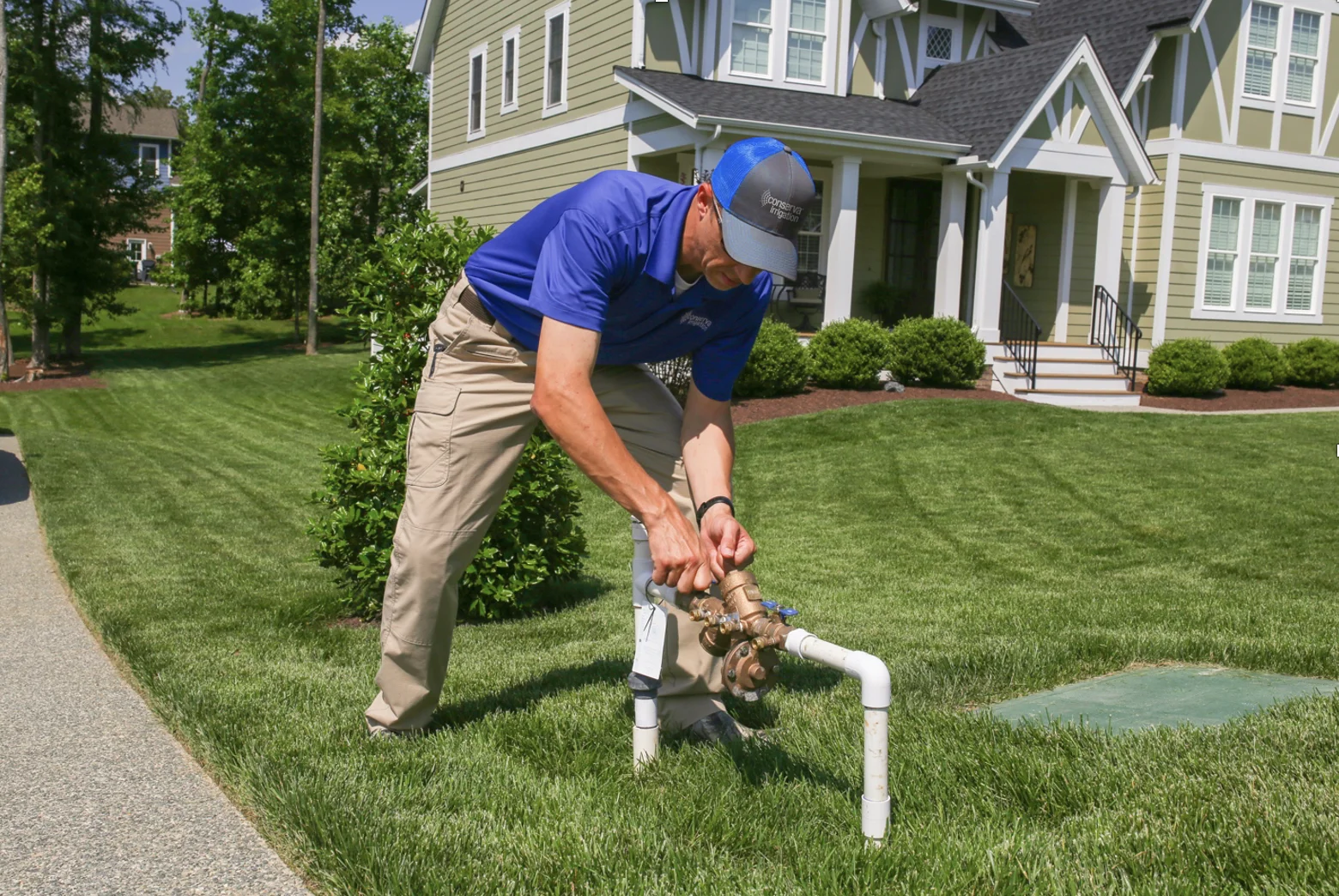
Think about what’s sitting around your sprinkler heads. Fertilizer, weed killer, whatever the dog left behind. The backflow preventer is that brass assembly you’ve probably seen sticking up near the foundation or the meter box, and its whole job is keeping that stuff out of the drinking water.
Inside it are springs and rubber seals, and those wear out over time like any other part. Hence the testing.
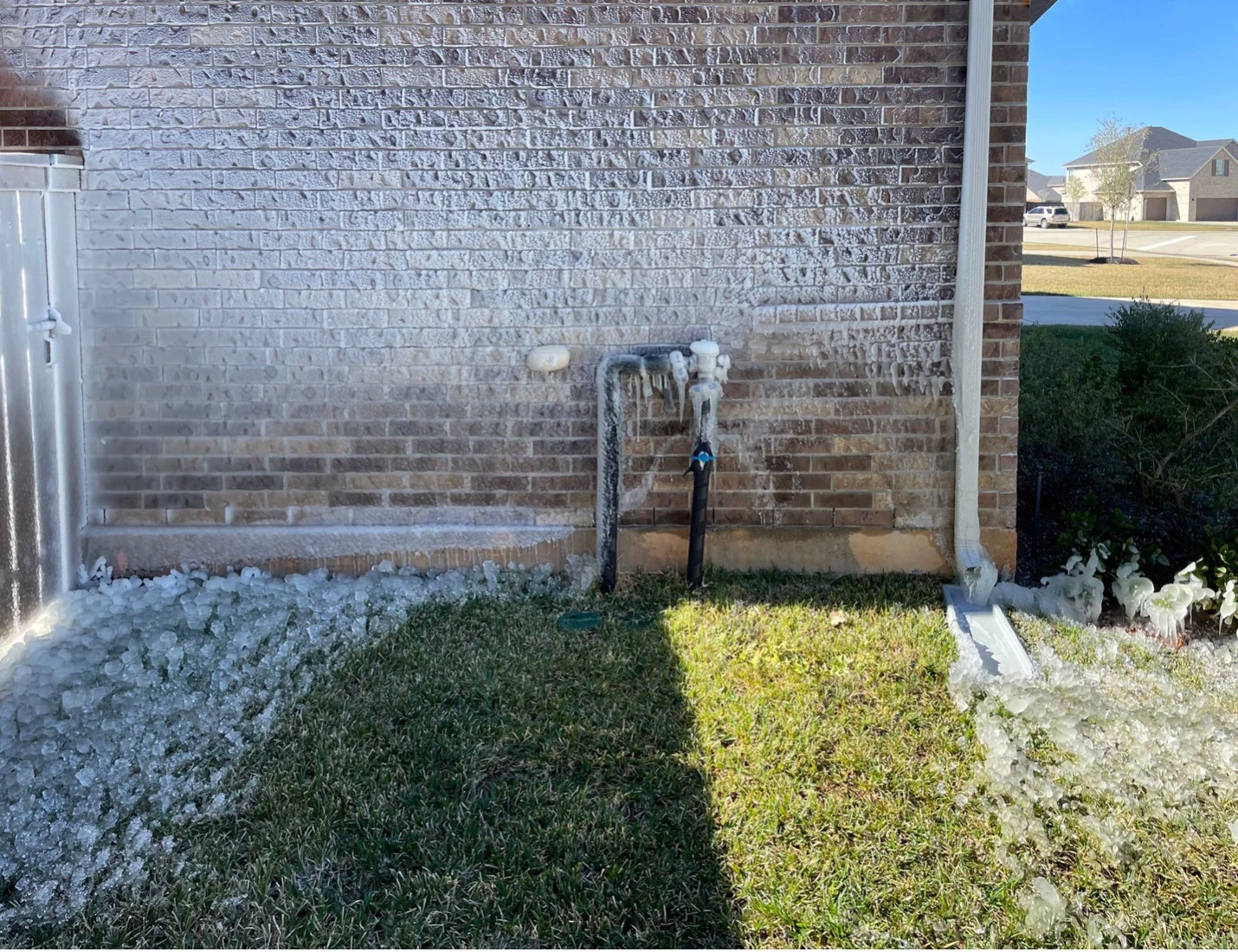
Broken Backflow Preventer
The 2024 law and the three-year cycle
Up until recently, most utilities in North Carolina wanted residential irrigation backflows tested once a year. Then in September 2024, Senate Bill 166 passed (it’s Session Law 2024-49 if you want to look it up).
In plain terms, if your water comes from a system run by a city, town or county, they can’t make you test a residential irrigation backflow more than once every three years, as long as your system isn’t injecting chemicals. The law also lets those utilities take results from a licensed plumbing contractor and not only a certified backflow tester.
Sounds simple. It isn’t quite.
- Private water companies aren’t covered by that piece of the law. Aqua North Carolina’s customer FAQ, for instance, still says annual.
- It’s only residential irrigation. Businesses, commercial properties and HOA common areas are usually still yearly.
- If your system feeds fertilizer through the lines, you probably don’t qualify.
- Some towns make you sign up for the three-year schedule. You don’t just get moved over.
And if your backflow gets repaired or replaced, it needs a new test no matter where you are in the cycle.
What it looks like around Lake Norman
It really comes down to who sends your water bill. These are the providers we run into most.
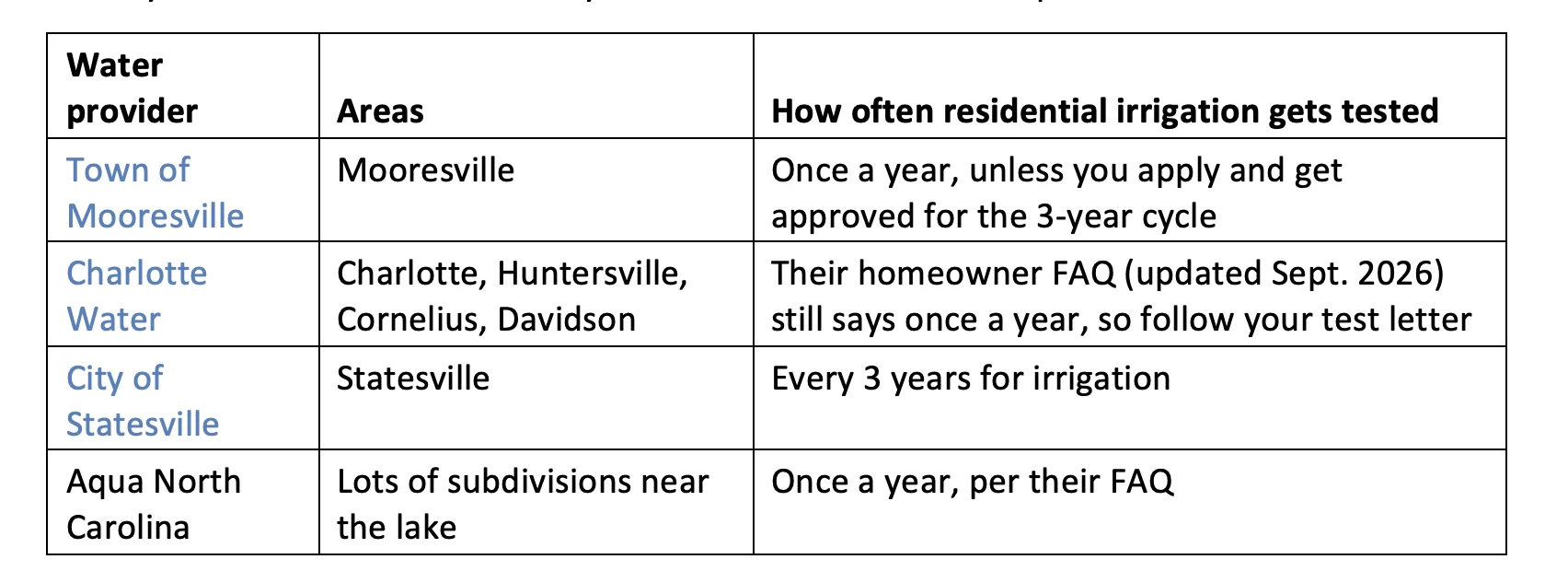
If you’re in Mooresville, don’t assume you’ve been switched. The town says you have to fill out its 3-Year Backflow Testing Cycle application and send it to backflowcc@mooresvillenc.gov (or drop it off at 2523 Charlotte Highway). Mooresville also moved its tracking to BSI Online on May 1, 2026, so reminder notices may look different than they used to.
On Charlotte Water, every irrigation system has needed an RP (reduced pressure) assembly since 2003. They don’t do the testing themselves and they don’t set the price. You call someone off their approved tester list and pay them directly.
Out in Concord, Denver, Sherrills Ford or somewhere else? Grab your water bill, find the provider, and look for their backflow or cross-connection page. Most of them have a coordinator you can call.
Inspection or test?
Utilities treat these as two different things, even though most of us use the words interchangeably.
An inspection is when someone from the utility comes out to make sure the assembly went in right. That usually happens one time, when a new system or meter is installed.
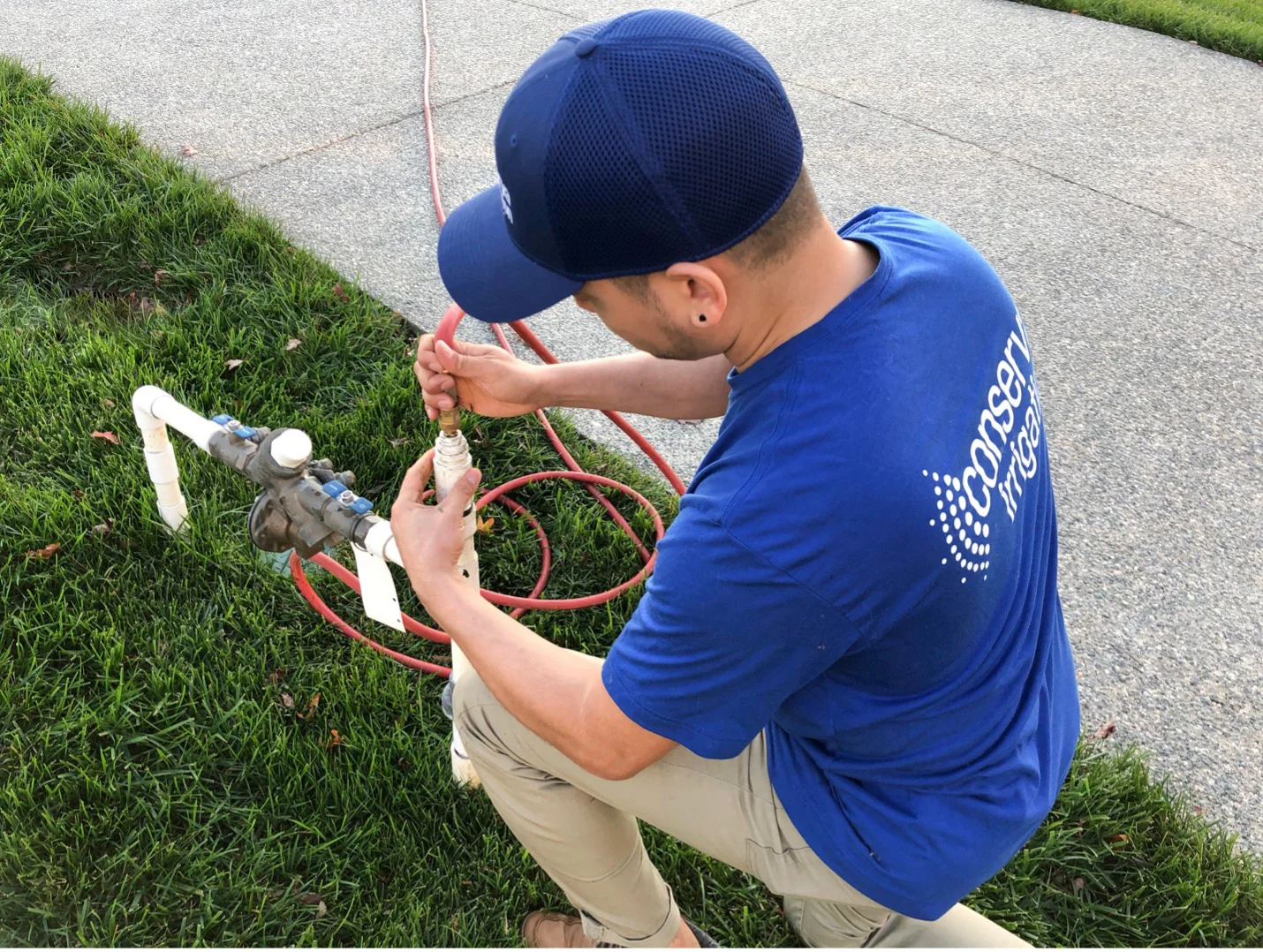
A test is the one you get letters about. An approved tester connects gauges to the assembly and checks that the valves are holding, then sends the results in for you. If it fails, the repair generally must be done by a licensed plumber, and then it gets tested again.
Questions & comments we hear a lot
“We don’t use the sprinklers anymore. Do we still need it tested?” Usually, yes. Charlotte Water keeps requiring the test until a licensed plumber caps the service, takes the backflow out, and an inspector checks it. Shutting off the controller isn’t enough.
“The test is due in December and our system’s winterized.” Call your utility and ask about a deferment. Charlotte Water allows it and even suggests testing in the spring after the system’s back on, which is about when you’d be scheduling summerization anyway.
“Our old backflow is shot.” On Charlotte Water, older double check valves (DCVAs) were grandfathered in. Once yours needs replacing, though, it has to be an RP.
“We just bought the house and have no idea when it was last tested.” Pretty common. Call the water provider with your address and they can look up the due date.
What to do next
So if you’ve got sprinklers on public water in North Carolina, plan on keeping a backflow preventer and getting it tested. Every year or every three years depends on your provider, your system, and (in Mooresville) whether you filled out the form.
Keep in mind a passing test only means the backflow works. It won’t catch a leaky valve, a cracked head along the driveway, or the zone that’s been soaking your side yard all summer.
We’re Conserva Irrigation of Lake Norman, and we work on sprinkler systems in Mooresville, Huntersville, Cornelius, Concord and nearby towns. If you’re new to us, we’ll do a free sprinkler system inspection and go over what we find with your heads, zones, timer and lawn.
We handle irrigation repair too. With cold weather on the way, it’s a good time to get Southern winterization on the calendar, or check out our maintenance packages (they include seasonal visits and 10% off repairs).
For commercial properties and HOAs, which are usually still on yearly backflow testing, take a look at our commercial irrigation services.
Call us at (704) 960-1565 or send us a request online.
Just so you know, this is general info and not legal advice. Your water provider sets the rules and they do change, so check with them on your schedule. Conserva Irrigation of Lake Norman will also be offering backflow inspections in 2027 – so stay tuned!